English
 Français
 Español
 русский
 عربى
Green Ohm
Green Ohm
Green Ohm
Green Ohm
Green Ohm
Green Ohm
Green Ohm
Green Ohm
Green Ohm
Content
- 1 What Cable Insulation Material Actually Does
- 2 The Main Types of Cable Insulation Material
- 3 Why Halogen-Free Polyolefin Insulation Took the Lead
- 4 Crosslinking: The Step That Raises the Ceiling
- 5 Matching Insulation Material to the Application
- 6 How We Suggest Evaluating a Cable Insulation Material
- 7 Where Insulation Materials Are Heading
Every cable makes the same quiet promise: keep the current inside the conductor and keep everything else outside. The layer that carries that promise is the cable insulation material, and in our years of supplying polyolefin compounds to cable makers, it is where the hardest engineering decisions usually land. Dielectric strength, heat resistance, flexibility, flame behaviour and service life all trace back to the formulation chosen on day one. This guide walks through the main insulation families, how they compare, and what we suggest checking before you commit to a material.
What Cable Insulation Material Actually Does
Insulation is not simply a plastic coating around copper. It is an engineered dielectric with several duties that sometimes pull against each other.
- Dielectric duty: hold the rated voltage without leakage current or breakdown, year after year.
- Thermal duty: survive continuous conductor heat and short-circuit peaks without softening, cracking or deforming.
- Mechanical duty: absorb bending, pulling, abrasion and impact during installation and service.
- Environmental duty: resist moisture, ozone, UV, oils and chemicals over a long service life.
- Fire duty: decide how fast flame spreads, how much smoke appears, and whether corrosive or toxic gases are released.
Insulation Is Not Sheathing
These two layers are often confused. Insulation sits directly against the conductor and carries the electrical duty. The sheath is the outer jacket and takes the mechanical and environmental punishment. Many compounds are developed for one role only, and swapping them is a reliability problem waiting to happen.
The Main Types of Cable Insulation Material
Almost every cable in service today uses one of a small number of polymer families. The choice is driven by temperature rating, voltage class, fire requirements and cost.
| Material family | Typical continuous rating | Fire and smoke behaviour | Common applications |
|---|---|---|---|
| PVC | 70-105 °C | Heavy smoke; releases hydrogen chloride | General building wire, low-voltage cables |
| Thermoplastic PE | 70-90 °C | Burns readily; no halogen acids | Data and low-voltage cables |
| XLPE | 90-125 °C | Halogen-free but flammable unless additised | Power distribution, medium voltage |
| LSZH polyolefin compound | 90-150 °C | Low smoke, no halogen acids, flame retardant | Public buildings, rail, tunnels, data centres |
| EPR / EPDM | 90-140 °C | Halogen-free, forms a protective char | Flexible power, mining, marine |
| Silicone rubber | 180-200 °C | Forms silica ash; halogen-free | High-temperature and appliance cable |
| Fluoropolymer | 200-260 °C | Strong fire performance, but contains halogen | Aerospace, plenum, specialty cable |
PVC and XLPE still dominate by volume because they are familiar, well understood and economical. The fastest-growing group, however, is halogen-free polyolefin compounds, especially where people, electronics or crowded escape routes are involved.
Why Halogen-Free Polyolefin Insulation Took the Lead
When PVC burns, it releases hydrogen chloride, which becomes hydrochloric acid in the presence of moisture. That acid corrodes switchgear, servers and structural steel, and it is dangerous to breathe. Smoke is the other problem: dense, dark smoke makes evacuation and firefighting far harder than the flames themselves.
Halogen-free polyolefin compounds replace the chlorine with a mineral filler system, usually aluminium hydroxide or magnesium hydroxide. When heated, these fillers release water vapour, which cools the surface and dilutes the flammable gases. The result is a material that is genuinely flame retardant, low in smoke and free of halogen acids. If you want the chemistry in more detail, it is worth reading what an LSZH compound is and how it works.
The trade-off is that high filler loadings stiffen the polymer and complicate extrusion. Formulation is everything, which is why two LSZH compounds with identical data sheets can behave very differently on the same line.
Fire classification schemes in building standards, such as the B1 and B2 classes used across Europe and increasingly elsewhere, have pushed halogen-free grades from niche to default in many projects.
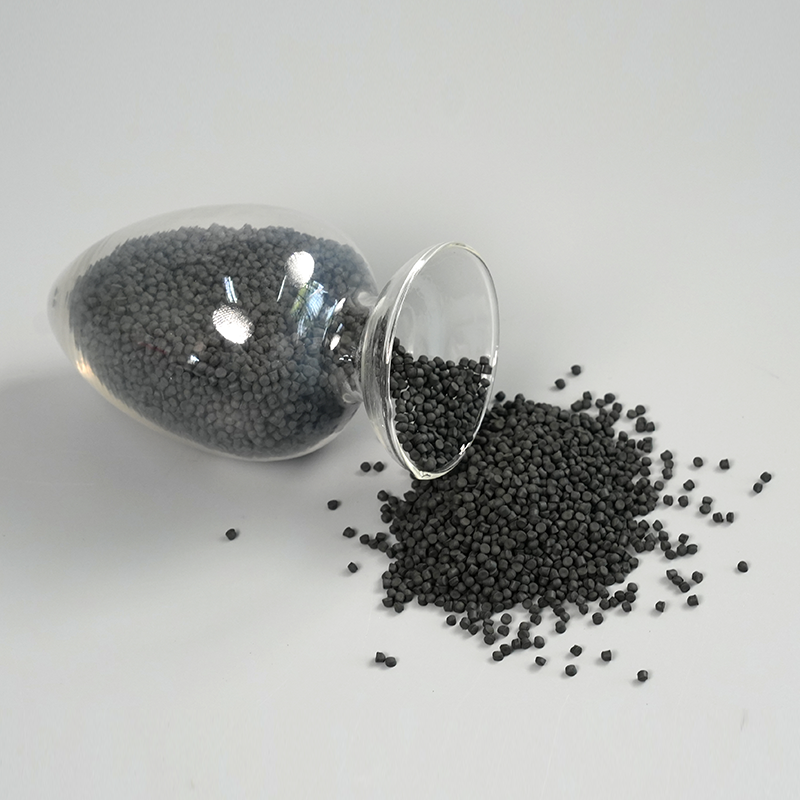
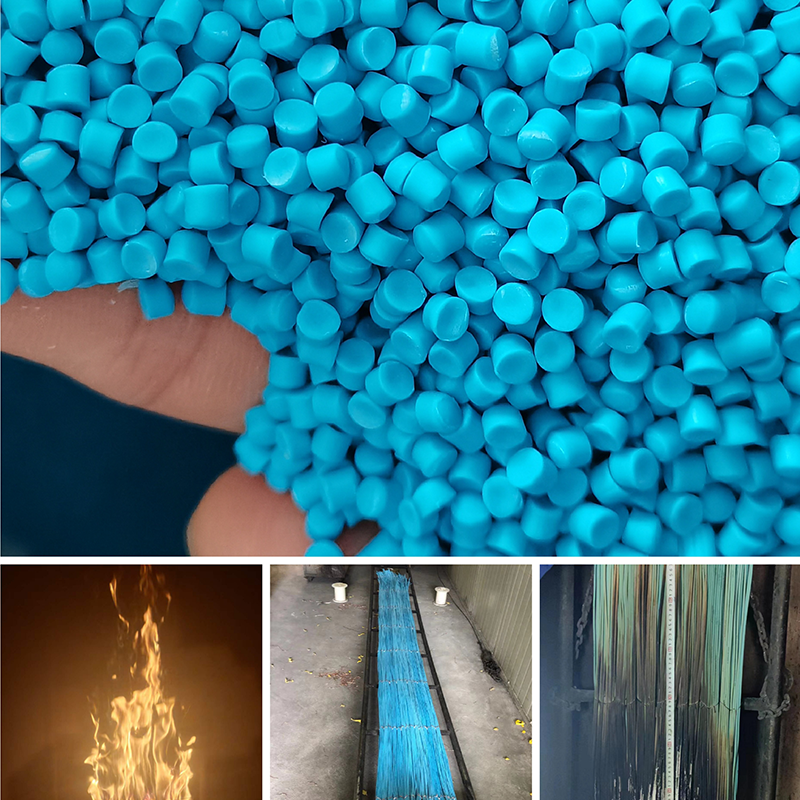
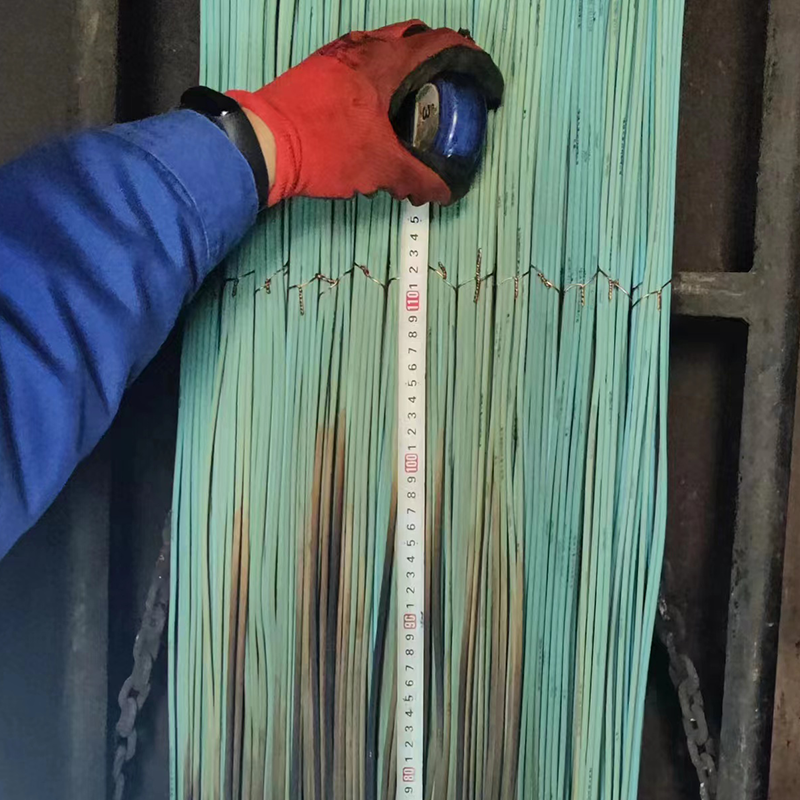 B1/B2 Low Smoke Halogen-Free Insulation CompoundsFor BYJ wire insulation, these low smoke halogen-free compounds meet B1 and B2 fire classification standards in building cable projects.View Product →
Crosslinking: The Step That Raises the Ceiling
Thermoplastic insulation softens as it heats, which limits how much current a given conductor size can carry. Crosslinking ties the polymer chains into a three-dimensional network, so the material no longer melts. It keeps its shape and dielectric strength at temperatures where a thermoplastic would already be flowing. The main routes are well established:
- Peroxide crosslinking: high output and excellent electrical properties, but requires a continuous vulcanisation line.
- Silane crosslinking: the compound is grafted and then cured with moisture, which suits smaller and more flexible production setups.
- Accelerator irradiation crosslinking: an electron beam creates the network in seconds, with no curing line needed and very consistent results.
- UV irradiation crosslinking: a fast, energy-efficient option for thinner insulation walls.
Each route gives a slightly different balance of temperature rating, flexibility and surface finish. A 125 °C rated crosslinked polyolefin is now common in both insulation and sheathing roles, provided the crosslinking method matches the cable geometry and the application class.
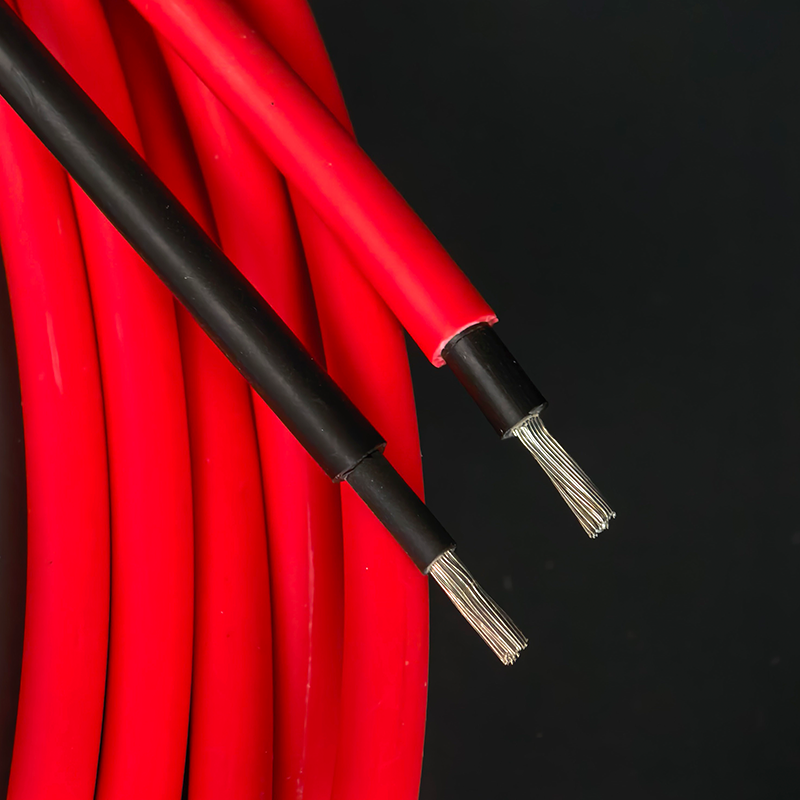
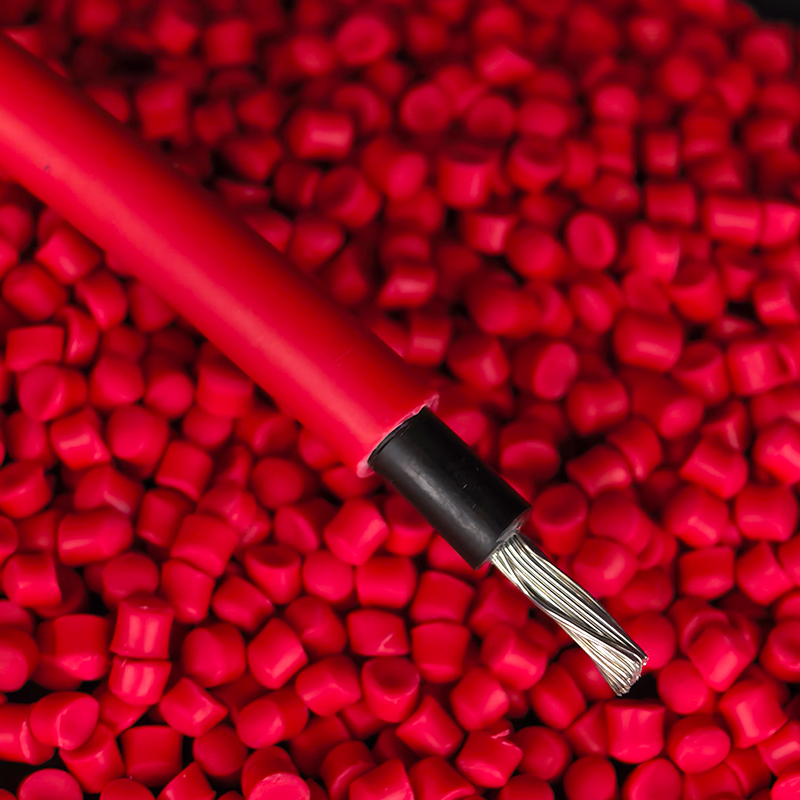 125°C Silane Cross-Linked LSZH Insulation and Sheathing for PhotovoltaicsSilane cross-linkable LSZH compound for photovoltaic cable insulation and sheathing, with 125°C heat resistance and UV/aging resistance for outdoor use.View Product →
Matching Insulation Material to the Application
There is no single best insulation material, only the one that fits the environment. A few patterns we see repeatedly:
- Buildings: halogen-free grades with a defined fire class, because evacuation routes and sensitive equipment are at stake.
- Power grids: crosslinked polyolefin with strong dielectric performance and stable ageing under continuous load.
- Rail and transit: low smoke, low toxicity and high flame resistance inside tunnels and carriages.
- Wind and solar: UV and weather resistance over decades of outdoor exposure.
- Communications and data centres: thin-wall insulation and jackets where signal integrity, bend radius and smoke output all matter.
- Marine and offshore: resistance to salt, oil, vibration and confined-space fire risk.
If you would like to see how these requirements map onto real products, our application areas page is a good starting point.
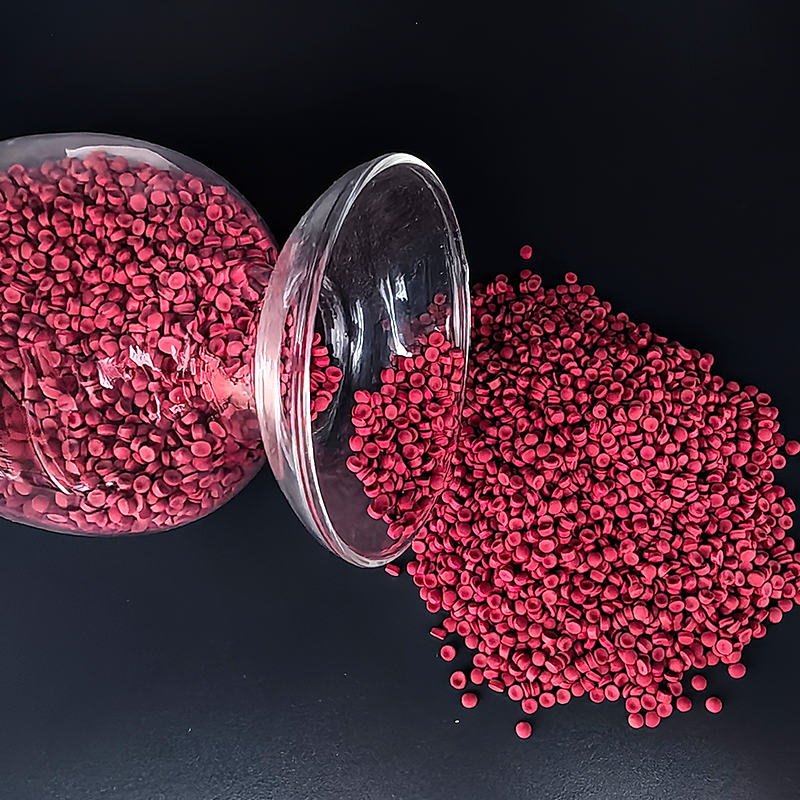
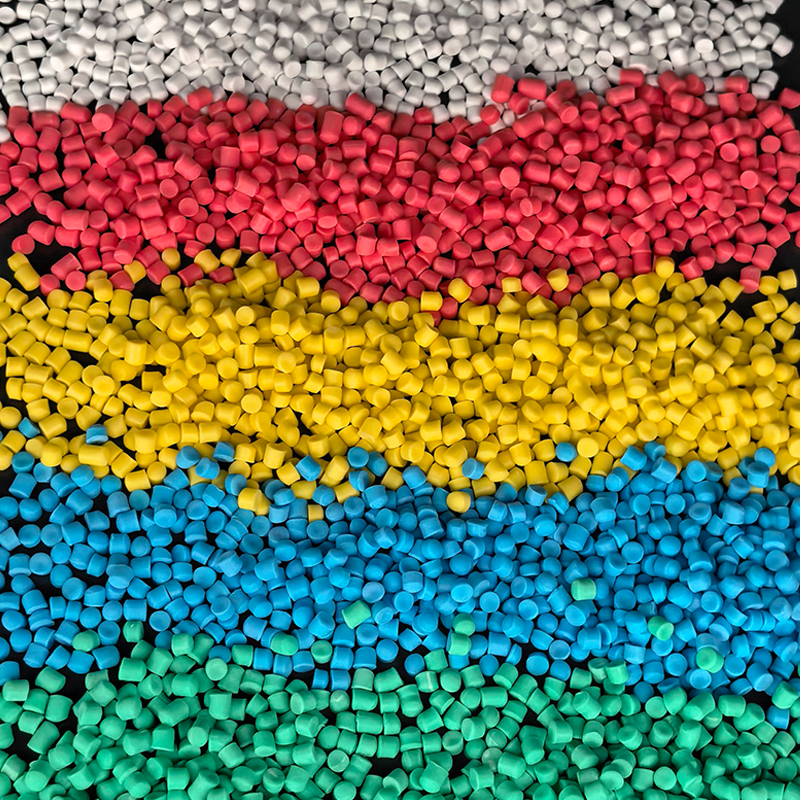 Accelerator Irradiation Cross-Linked LSZH Insulation for Rail TransitDesigned for traction and signaling cables in trains and subways, this LSZH compound meets rail fire safety needs with thermal cycling resistance.View Product →
How We Suggest Evaluating a Cable Insulation Material
Before locking in a compound, work through these questions in order:
- What is the maximum continuous conductor temperature, and what short-circuit peak must be survived?
- What voltage class and wall thickness will the insulation see?
- Which fire standard applies, and is a smoke density or acid gas limit specified?
- Does the material process cleanly on your existing extrusion line at your target speed?
- What ageing, thermal or water immersion tests must the finished cable pass?
- Can the supplier show batch consistency data, not just a single type test report?
The last point matters more than it sounds. Insulation failures are rarely caused by a bad formulation on paper; they come from batch-to-batch variation that only shows up after months in service.
Where Insulation Materials Are Heading
Demand is moving in a few clear directions. Higher temperature ratings are spreading into mainstream products. Halogen-free requirements are expanding from public buildings into industrial and residential wiring. Thin-wall designs are being pushed to save copper and weight, which puts more pressure on mechanical toughness. And energy efficiency during production now counts too, which is one reason UV and accelerator irradiation curing attract interest: they crosslink quickly with far less heat.
Recyclability is the next discussion. Polyolefin-based systems are inherently easier to reprocess than heavily filled or halogenated alternatives, and cable makers are already asking about it.
Choosing a cable insulation material is ultimately a balancing act between electrical performance, fire safety, processing behaviour and cost. Getting it right usually comes down to working with a compound supplier who understands all four and can formulate around your line rather than asking your line to adapt to an off-the-shelf pellet. We build polyolefin compounds across two production sites in Nantong, supported by an in-house research centre and a team that spends most of its time on exactly these questions. If you are weighing up a new insulation grade, we are always glad to talk it through.