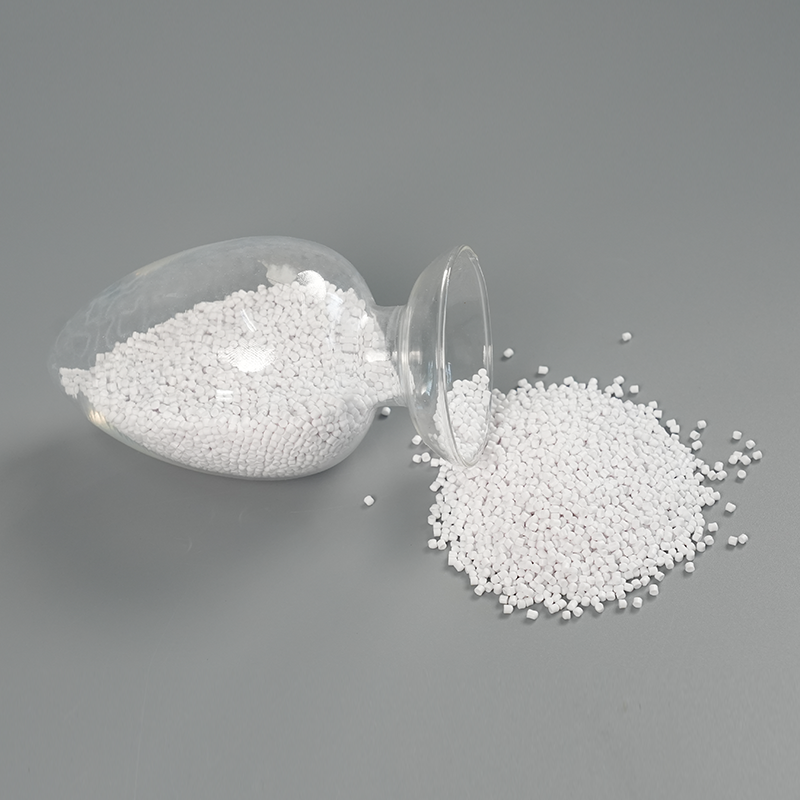
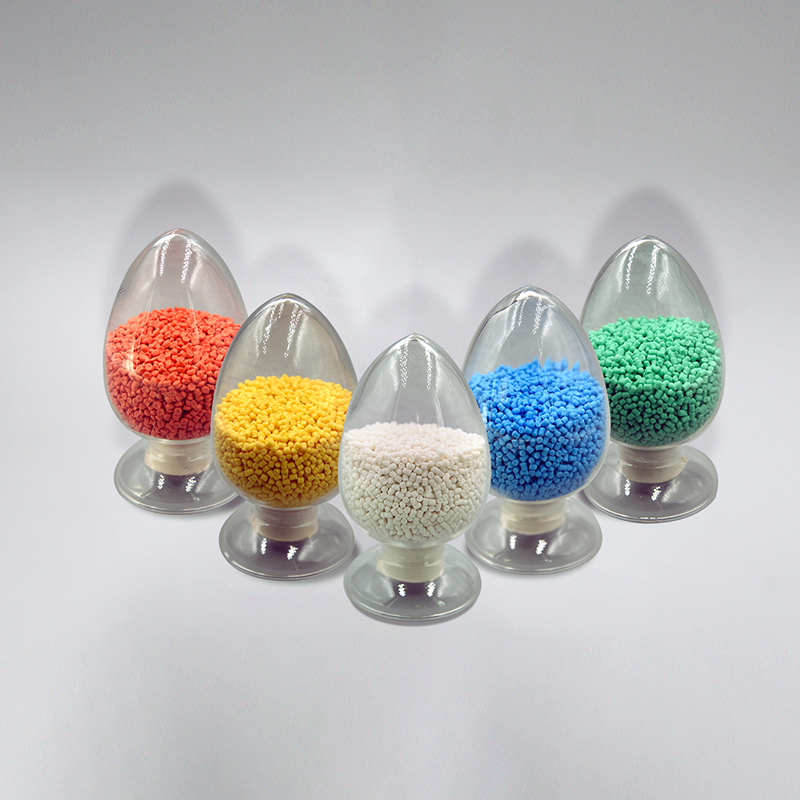
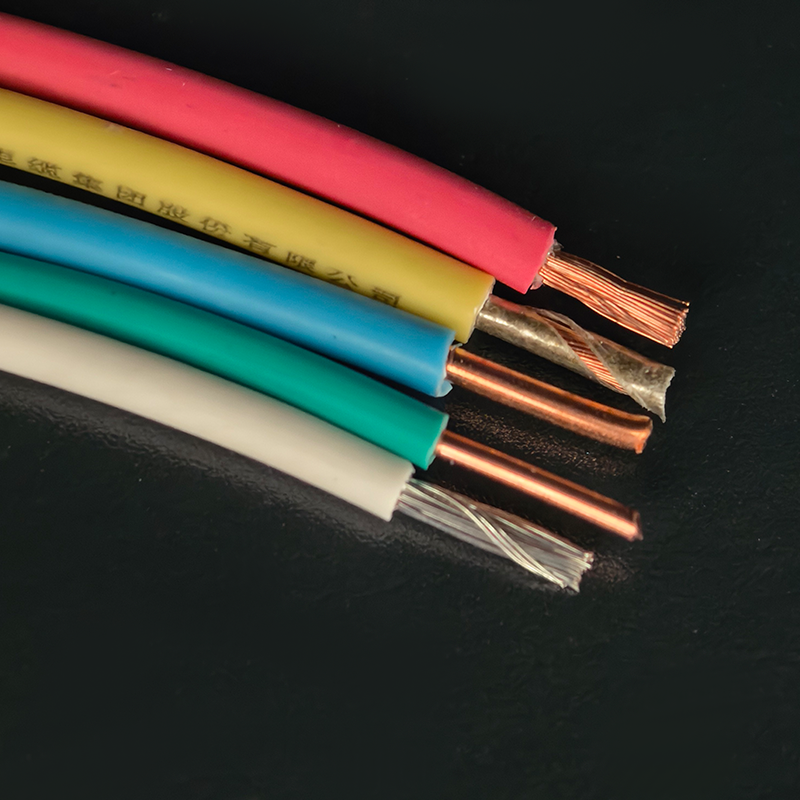
Jiangsu Duoshang New Materials Technology Co., Ltd. develops and produces polyolefin cable compounds in Nantong, China. As an Irradiation Cross-linked LSZH Compound manufacturer, we formulate accelerator-irradiation cross-linked low-smoke halogen-free flame-retardant insulation and sheathing grades for cables that must retain mechanical strength and electrical integrity under sustained heat, fire and dense-occupancy conditions. The range sits inside our broader LSZH Compound family and is supplied as ready-to-extrude pellets with documented quality data.
Why irradiation cross-linking
Electron accelerator irradiation creates a three-dimensional network in the polyolefin after extrusion. Compared with moisture-triggered systems, this approach offers more uniform cross-linking along the cable, faster line processing and no chemical residue from silane grafting. Temperature resistance and flame-retardant performance therefore remain stable across long production runs, which is why these grades are chosen for subway tunnels, data centers, nuclear power facilities and ultra-high-rise commercial buildings.
- Uniform cross-linking over the full cable length
- Faster throughput, with no steam or sauna curing stage
- No chemical residue from cross-linking additives
- Stable elevated-temperature and flame-retardant performance
Product range and application fit
Our irradiation-crosslinked LSZH range covers four application positions. All are supplied as pelletized compounds for cable extrusion, with the accelerator dose confirmed during project engineering.
| Grade |
Application fit |
Key characteristics |
| 125°C Accelerator Irradiation Cross-linked LSZH Flame Retardant Insulation and Sheathing Material for Photovoltaics |
Photovoltaic system cables, where long-term heat exposure and outdoor service are expected |
125°C thermal rating, low smoke, halogen-free, balanced insulation and sheathing performance |
| Accelerator Irradiation Cross-linked LSZH Flame Retardant Insulation for Power Grids (Class B1/B2) |
Distribution and substation cables with high fire-safety requirements |
B1/B2 flame class, stable insulation properties, referenced to GB/T 32129-2015 |
| Accelerator Irradiation Cross-linked LSZH Flame Retardant Insulation for Construction Engineering (Class B1/B2) |
High-rise buildings, hospitals and underground projects |
Low smoke, halogen-free, low corrosive gas, B1/B2 fire performance |
| Accelerator Irradiation Cross-linked LSZH Flame Retardant Insulation for Rail Transit (Class B1/B2) |
Subway, rail and tunnel cables in dense-occupancy transit systems |
High fire safety, low smoke emission and stable mechanical performance after irradiation |
When a project needs a slightly different thermal rating, color or mechanical balance, we adjust the formulation on the same polyolefin platform rather than asking you to change cable construction.
Related cross-linking and sheathing platforms
Irradiation cross-linking is one route in our LSZH portfolio. For customers with different line capabilities, we also supply:
For lines equipped with UV curing and applications that suit ultraviolet cross-linking.
Moisture cross-linking grades, including B1/B2 construction formulations supplied in separate components.
Thermoplastic LSZH sheathing compounds remain available for cable jackets that do not require cross-linking.
Material and specification considerations
We develop and recommend materials around your cable structure, processing method, applicable standard and service environment. For irradiation grades, the main inputs are conductor temperature, voltage class, insulation or sheathing thickness, installation location and the fire classification demanded by the project. LSZH formulations are free from halogens and heavy metals and do not release toxic or corrosive gases during combustion, which is the basic safety requirement for confined and high-occupancy spaces.
- Pellet form for standard thermoplastic extrusion and automatic dosing systems
- Custom color for insulation or sheathing identification
- Formulation adjustment for cross-linking density, flame retardance and mechanical performance
- Documentation aligned to your project and destination market
Quality, testing and project support
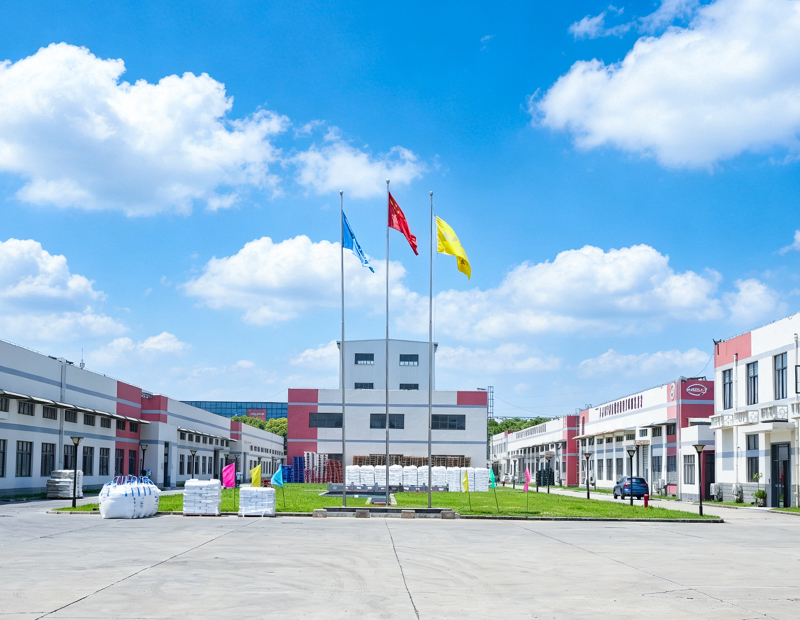
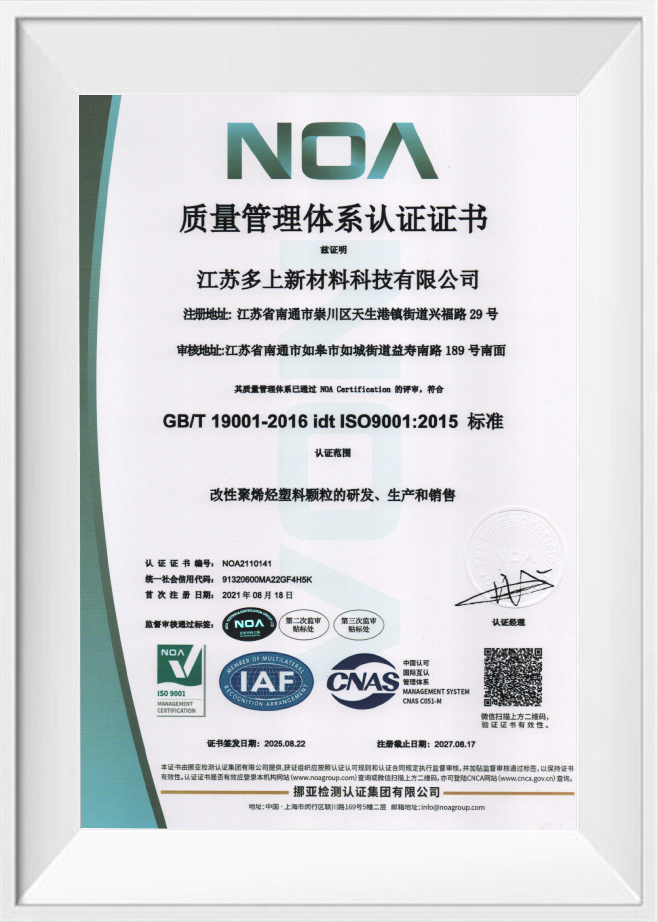
Our headquarters R&D center covers more than 3,000 square meters and holds R&D equipment valued above 35 million RMB. The team of more than 30 specialists includes doctors and Jiangsu and Nantong talent program recipients. Two production bases with more than 10 polyolefin compound lines support sample evaluation, project batches and serial supply. We operate under ISO 9001 quality management system requirements, apply 6S management in the R&D center, and use an intelligent quality control system to keep batch-to-batch performance stable. For overseas projects, we provide TDS, SDS, product specifications and relevant test and certification documents so your engineering team can complete the approval process.
Processing, irradiation and line integration
Irradiation-crosslinked LSZH compounds are extruded on conventional thermoplastic cable lines. Because cross-linking occurs after extrusion on an electron accelerator, your line speed is not tied to a chemical grafting reaction. The accelerator dose controls the final cross-link density, so during project development we agree on the target gel content, dose window, recommended processing trend and expected mechanical performance with your process engineers. Normal polymer pellet handling applies, and an SDS is supplied with each shipment.
Information we use to configure your solution
Send us the following project context so we can prepare a suitable grade, sample plan and quotation:
- Cable type, applicable standard and destination market
- Application: photovoltaic, power grid, building, rail transit or other
- Insulation or sheathing position, conductor size and wall thickness
- Continuous operating temperature and overload conditions
- Required fire classification, including B1/B2 where specified
- Extruder line speed and available electron accelerator dosage
- Target gel content, color, quantity and delivery schedule
- Documentation needed: TDS, SDS, test reports or certificates
Frequently asked questions
What is the difference between irradiation and silane cross-linking?
Irradiation grades are cross-linked by an electron accelerator after extrusion, giving uniform network formation and no chemical residue. Silane grades cross-link with moisture after extrusion and suit plants without accelerator capacity. We supply both platforms and can recommend the right route for your line configuration.
Can your irradiation LSZH compound be used for 125°C photovoltaic cables?
Yes. Our 125°C Accelerator Irradiation Cross-linked LSZH Flame Retardant Insulation and Sheathing Material for Photovoltaics is formulated for PV cables that must withstand sustained elevated-temperature service while maintaining low smoke and halogen-free performance.
Which B1/B2 irradiation grades can I order?
We offer accelerator irradiation cross-linked LSZH flame retardant insulation for power grids, construction engineering and rail transit, each positioned at Class B1/B2 fire-safety levels. We confirm the cable standard before final grade selection.
How do you support sample approval and serial supply?
We start from your cable specification and application, provide technical data for evaluation, and coordinate sample quantities for extrusion and irradiation testing. After approval, our production lines deliver serial quantities with batch documentation.
What documents do you provide with each order?
TDS, SDS, product specifications and relevant test or certification documents are available for project evaluation. We align the document set with your incoming inspection and project requirements before dispatch.

 English
 Français
 Español
 русский
 عربى