Jiangsu Duoshang New Materials Technology Co., Ltd. is a China B1/B2 LSZH Cable Material manufacturer, producing polyolefin-based insulation and sheathing compounds for wire and cable projects that demand higher fire safety. Our B1/B2 low-smoke halogen-free materials are formulated with polyolefin resin, high-efficiency flame retardants, synergists, carbonization agents, antioxidants and auxiliary additives, then mixed and granulated on twin-screw compound lines.
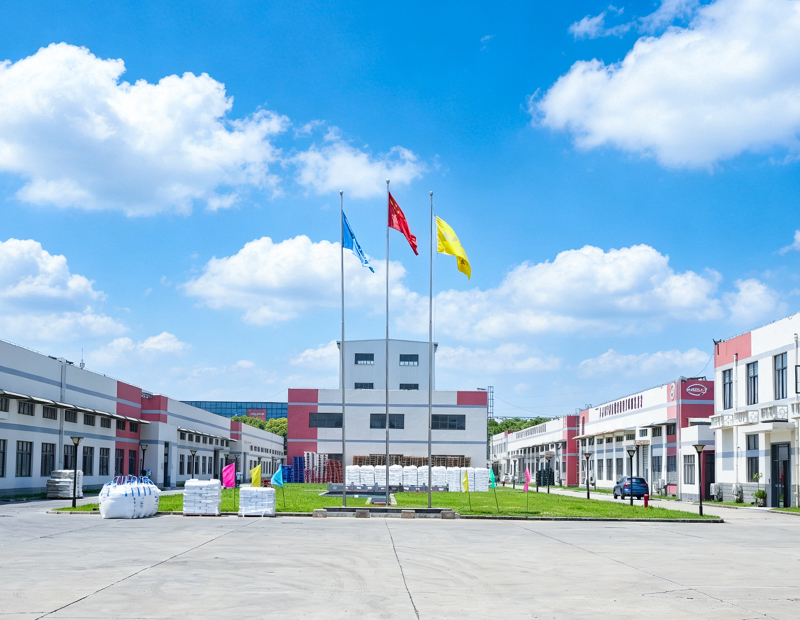
We combine formulation development, pilot testing and serial production in one organisation: more than 10 polyolefin compound production lines across two production bases, backed by an R&D center of over 3,000 m² and a professional team of more than 30 researchers. This lets us develop B1/B2 grades against a specific cable construction and support the cable maker from material selection through process start-up and batch supply.
What Class B1/B2 Means in Cable Fire Performance
Class B1 and B2 LSZH materials are not standard flame-retardant LSZH compounds with a higher oxygen index. They are engineered to control the full fire scenario: lower heat release, reduced smoke density, lower smoke toxicity, minimized corrosive emissions and no flaming droplets during combustion. For building wiring, this behaviour is assessed under GB 31247-2014 for B1 and B2 classifications and under EN 13501-6 for B1ca, B2ca and Cca construction classes.
- Low total heat release and controlled heat release rate during combustion.
- Halogen-free formulation with pH and conductivity limits on combustion gases.
- Smoke density limits under flaming and flameless conditions.
- No flaming droplets, reducing fire spread in vertical and high-rise installations.
- Stable char formation to maintain cable integrity for longer evacuation time.
B1/B2 LSZH Range: Insulation and Sheathing
We manufacture this category as two complementary product families. The right B1/B2 package normally combines an insulation grade and a sheathing grade matched to the same fire-performance target and to the cable maker's extrusion process.
Designed mainly for BYJ wire insulation, this family meets high flame retardancy, low smoke toxicity, low corrosiveness and no dripping. Typical grades include DS-ZWG-105-B1, DS-WDZF-105-B1, DS-GW-105-B1 and their B2 equivalents, with tensile strength from 10.0 MPa, oxygen index up to 40% and 20°C volume resistivity above 10¹⁴ Ω·cm.
Formulated for cable jackets of various specifications, with high flame retardancy, low smoke and no dripping or cracking. Grades such as DS-WDZH-B1, DS-WDZH-X-B1, DS-WDZH-W-B1 and DS-WDZH-B2 are available; the range is checked for thermal denaturation, thermal shock resistance and ozone resistance.
Application Fit and Construction Types
B1/B2 compounds are specified where evacuation time, smoke toxicity and secondary fire damage are critical. Typical projects include schools, hospitals, exhibition centers, metro systems, airport terminals, urban utility tunnels, commercial complexes and high-rise buildings.
- Building wiring and fixed installation cables, including BYJ wires and control cables.
- Power distribution cables for public buildings, tunnels and infrastructure.
- Rail transit and airport cabling requiring low smoke and high flame retardancy.
- Shipboard and offshore cable constructions where halogen-free behaviour is mandatory.
- Photovoltaic and new energy systems where the cable may be exposed to higher ambient temperatures.
For a given project, we select the material according to voltage class, wall thickness, conductor temperature rating, cable standard and the available extrusion or cross-linking line. This is why we treat B1/B2 as a tailored material package rather than a single stock product.
Critical Specifications We Control in Production
Because B1/B2 approval depends on the complete fire-performance package, we test more than flame retardancy. The table below summarises typical values from our published B1/B2 insulation and sheathing grades.
| Property |
B1/B2 Insulation Typical |
B1/B2 Sheathing Typical |
| Tensile strength |
≥10 MPa; typical 10.0–11.5 MPa |
≥10 MPa; typical 12 MPa |
| Elongation at break |
≥150%; typical 170–180% |
≥160%; typical 170% |
| Oxygen index |
≥28%; typical 38–40% |
≥30%; typical 38–42% |
| Smoke density, flaming |
≤100; typical 45–65 |
≤100; typical 62–75 |
| pH of combustion gases |
≥4.3; typical 5.1–5.2 |
≥4.3; typical 5.1–5.2 |
| HCl and HBr content |
≤0.5%; typical <0.5% |
≤0.5%; typical <0.5% |
| Conductivity of aqueous solution |
≤10 μS/mm; typical 0.51–0.53 |
≤10 μS/mm; typical 1.1 |
Insulation grades also maintain 20°C volume resistivity in the range 2.3–5.0×10¹&sup4; Ω·cm and dielectric strength ≥20 MV/m. Sheathing grades are validated for thermal denaturation ≤50%, thermal shock resistance and ozone resistance without cracking.
Engineering and Quality Approach
We develop B1/B2 formulations against the cable design, not as a generic pellet. Our technical team defines the base resin, flame-retardant package and cross-linking route according to the conductor temperature rating, wall thickness, extrusion method and applicable standard. This is why a B1 insulation for a thin-wall BYJ wire can be specified differently from a B1 insulation for a large power cable.
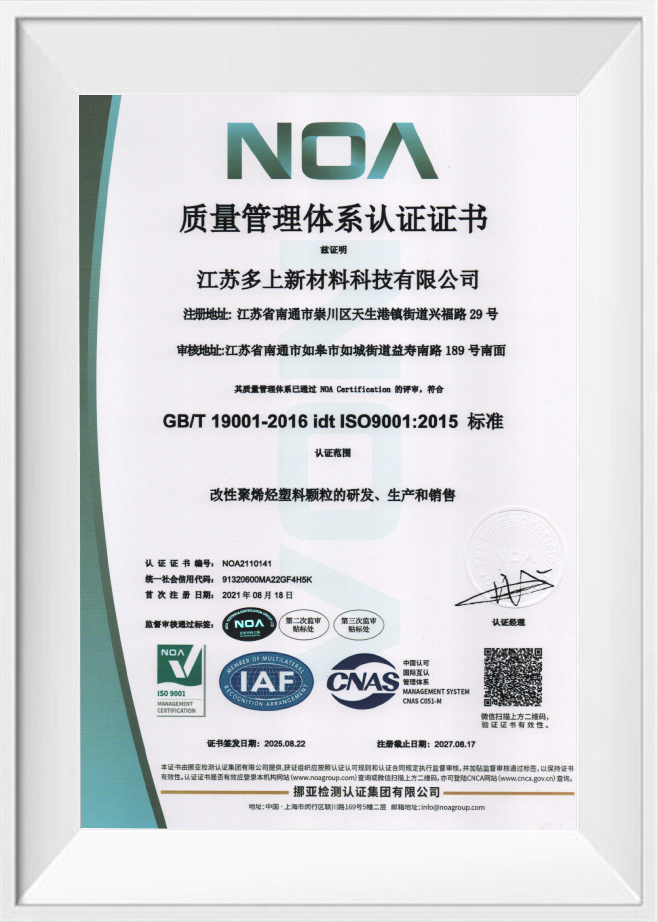
Quality management follows ISO 9001 requirements and 6S management in the R&D center. The company has built an intelligent quality control system that supports standardization, precision and batch-to-batch consistency across more than 10 production lines. For overseas projects, we provide TDS, SDS, product specifications and relevant test/certification documents to support material evaluation and final acceptance.
Processing and Line Integration
B1/B2 LSZH compounds are suited to conventional polyolefin cable extruders. We confirm the recommended drying conditions, temperature profile, screw speed and line speed in the technical data sheet for each grade, and we advise on screw geometry where very high filler loading makes melt homogeneity critical.
- Thermoplastic B1/B2 insulation and sheathing: extrusion followed by standard cooling; no post-cure required.
- Silane cross-linkable LSZH: two-part system mixed before extrusion; cross-linking occurs after moisture exposure.
- UV cross-linked LSZH: extrusion with UV-transparent layer, followed by in-line UV curing oven.
- Irradiation cross-linked LSZH: standard extrusion followed by electron-beam irradiation; the compound is formulated for dose response and retained elongation.
For every cross-linking route, we define the target degree of cross-linking using hot elongation and permanent deformation values so the finished cable matches its temperature class.
Acceptance, Storage and Incoming Inspection
Each delivery can be accompanied by a certificate of analysis covering density, tensile strength, elongation, oxygen index, smoke density, pH, HCl/HBr content and conductivity. We recommend agreeing on specification limits and sampling frequency before shipment, and retaining a sealed lot sample for incoming inspection at the cable plant.
Pellets should be stored in a dry, ventilated warehouse, away from direct sunlight and moisture. The TDS for each grade states the recommended storage life and pre-drying conditions; this is especially important for silane cross-linkable materials, which begin to cross-link after moisture exposure. We also confirm packaging form, palletization and documentation requirements in the proposal.
Information We Use to Configure Your Solution
To prepare a B1/B2 grade recommendation, technical datasheet and quotation, we need the following project inputs:
- Cable function and construction: insulation, sheathing or both; conductor size; wall thickness.
- Fire-performance target: GB 31247 B1/B2, EN 13501-6 B1ca/B2ca/Cca, or customer-specific test protocol.
- Voltage class, conductor temperature rating and intended service environment.
- Extrusion equipment: screw diameter, L/D ratio, line speed and available curing system.
- Cross-linking route: thermoplastic, UV, silane moisture cure or electron-beam irradiation.
- Colour, packaging form, annual volume and documentation deliverables.
With this information, we can select an existing B1/B2 grade, adjust a formulation, or develop a custom compound under our OEM/ODM process and provide a clear specification for approval before production.
Frequently Asked Questions
What is the difference between B1 and B2 LSZH cable material?
B1 and B2 are classification levels in GB 31247-2014. B1 represents a higher fire-performance level with more demanding requirements on heat release, smoke production and burning behaviour than B2. Both are available in our insulation and sheathing families, and we match the grade to the building code and cable location.
Can the same B1/B2 compound be used for insulation and sheathing?
Not automatically. Insulation grades prioritize electrical properties such as volume resistivity and dielectric strength, while sheathing grades prioritize mechanical toughness, thermal denaturation, ozone resistance and jacket processing. We normally recommend a matched pair from the B1/B2 range for consistent fire performance.
Do you supply test data and compliance documents for project approval?
Yes. We provide TDS, SDS, product specifications and relevant test/certification documents as required. Certificates of analysis can be issued for each lot, covering mechanical, electrical and combustion-related parameters agreed in the specification.
Can you develop a custom B1/B2 formulation for our cable design?
Yes. Custom formulation is part of our R&D and OEM/ODM process. We need the cable construction, target standard, extruder configuration, cross-linking route and operating temperature to adjust the formula and validate it with pilot testing before volume production.
How should B1/B2 LSZH pellets be stored and handled?
Store pellets in a dry, cool, ventilated warehouse, protected from moisture and direct sunlight. For silane cross-linkable grades, keep the two components separate until extrusion and observe the recommended consumption period after mixing. Detailed storage and pre-drying instructions are provided in the TDS.

 English
 Français
 Español
 русский
 عربى