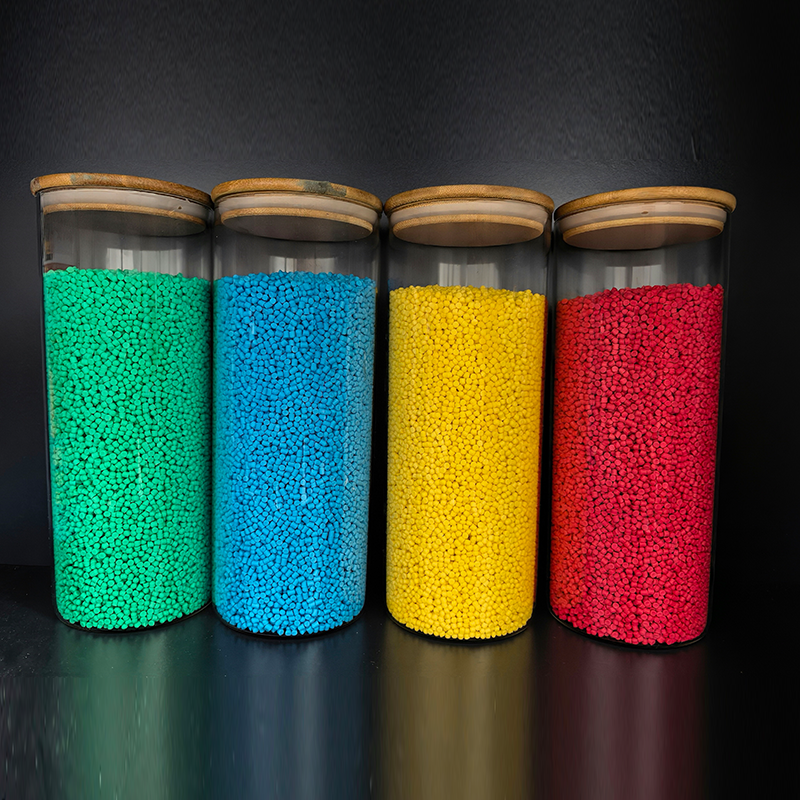
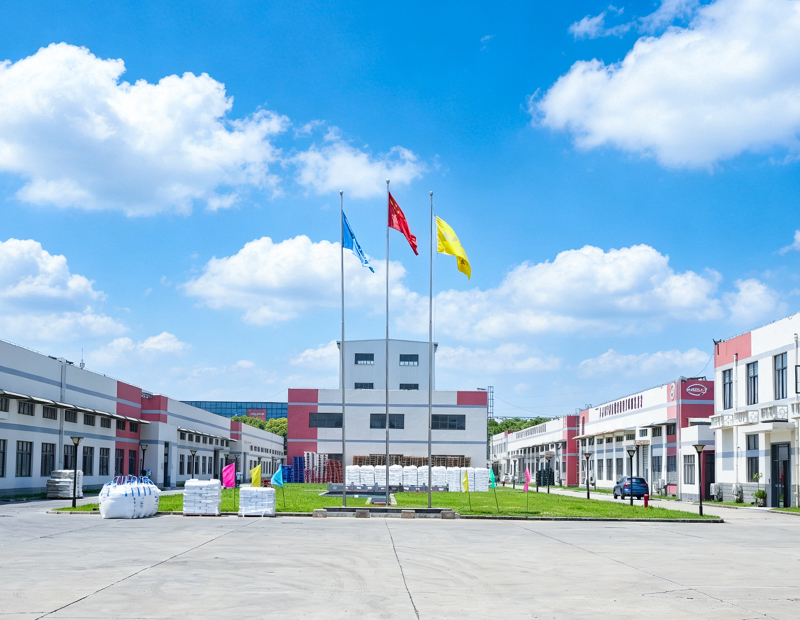
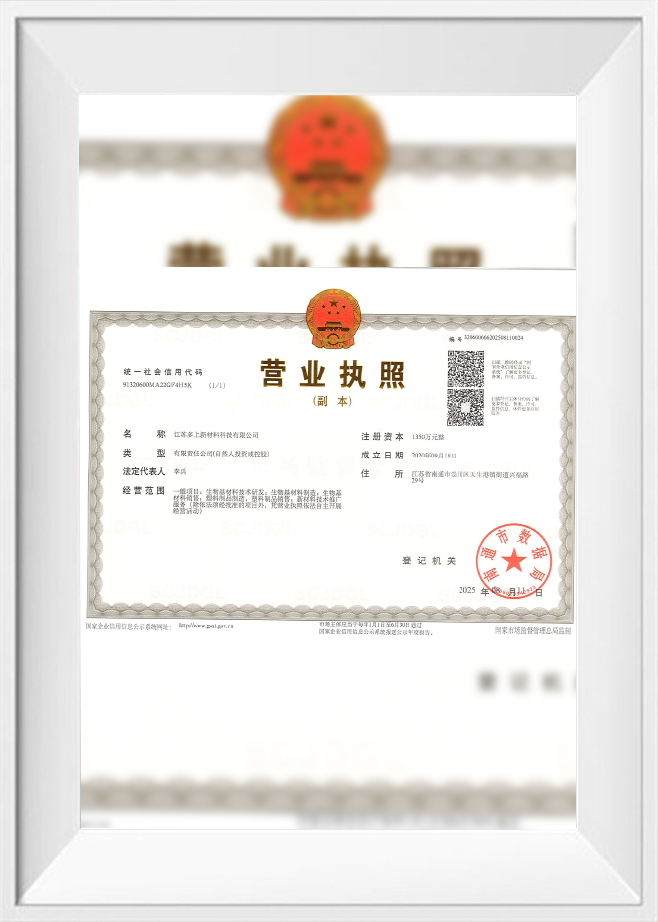
Jiangsu Duoshang New Materials Technology Co., Ltd. is a UV Crosslinked LSZH Compound manufacturer based in Nantong, Jiangsu Province, China. As a National High-Tech Enterprise, we specialize in the research, development, production and sales of polyolefin cable compounds, and supply UV-crosslinked low-smoke halogen-free flame-retardant insulation as an integral part of our LSZH product family for power, communication, photovoltaic, new energy, rail transit and marine cable applications.
UV crosslinking uses ultraviolet radiation to trigger a crosslinked network in the compound during the cable manufacturing process. Compared with other crosslinking routes, it provides lower equipment investment, shorter production cycles, high efficiency and reduced processing cost, which makes it practical for rapid continuous mass production of small- to medium-section cables. Our UV Crosslinked LSZH Compound range is therefore primarily applied to residential wiring and conventional power distribution lines in small- to medium-sized public buildings.
Offered Range and Where Each Material Fits
We manufacture UV-crosslinked LSZH flame-retardant insulation compounds as well as UV-crosslinked polyethylene insulating compounds within the same polyolefin platform. For projects with thicker insulation walls, higher temperature demands or site conditions that make immediate UV crosslinking difficult, our broader LSZH Compound range includes irradiation cross-linked, silane cross-linkable and thermoplastic options. This allows us to recommend the crosslinking route that fits the cable type, production equipment and target standard.
The representative product in this category is UV Irradiation Cross-linked LSZH Flame Retardant Insulation for Construction Engineering (Class B1/B2). It is positioned for construction engineering cables where low smoke, zero halogen and improved fire reaction are required, with a processing route compatible with UV crosslinking.
- UV Crosslinked LSZH Flame-Retardant Insulation: for residential wiring, power distribution lines and small- to medium-sized public building cables.
- UV Crosslinked Polyethylene Insulating Compound: for polyolefin insulation where a UV-curable crosslinking system is preferred.
- Irradiation Cross-linked LSZH: for construction, power grid and photovoltaic cables using electron-beam crosslinking after cable formation.
- Silane Cross-linkable LSZH: for construction engineering cables requiring B1/B2 fire performance with moisture crosslinking after extrusion.
- Thermoplastic LSZH: for insulation and sheathing applications where no crosslinking step is required.
| Compound type |
Typical cable application |
Why it is selected |
| UV Crosslinked LSZH insulation |
Residential wiring, conventional power distribution, small- to medium-sized public buildings |
Fast line-integrated crosslinking, lower equipment investment and efficient continuous production |
| UV Crosslinked polyethylene insulation |
Polyolefin-insulated cables where UV curing is available on the line |
Processing economy and crosslinking performance for medium-speed lines |
| Irradiation Cross-linked LSZH |
Construction engineering, power grid and photovoltaic cables |
Suitable for thicker wall sections and higher temperature classes such as 125°C photovoltaic cable |
| Silane Cross-linkable LSZH |
Construction engineering cables with Class B1/B2 fire requirements |
Moisture crosslinking after extrusion without electron-beam equipment |
| Thermoplastic LSZH sheathing |
General LSZH insulation and sheathing applications |
Simplified processing and reprocessability |
Application Fit and Processing Considerations
UV crosslinking is an in-line process, so the material formulation must be balanced against insulation thickness, line speed and the UV dose delivered by the curing unit. Thinner insulation walls cure more readily, while higher line speeds require a sufficiently reactive photoinitiator package and adequate lamp power. We match the compound to the cable maker's existing extrusion line and target output.
For small- to medium-section building wires and conventional distribution cables, UV-crosslinked LSZH gives a fast production rhythm without the need for a separate electron-beam step or a post-extrusion moisture curing warehouse. Where cable construction moves into thicker walls, larger conductors or higher temperature classes such as 125°C photovoltaic cable, our irradiation cross-linked and silane cross-linkable LSZH options become the relevant choices.
Engineering and Formulation Support
We develop and recommend materials based on cable structure, processing methods, applicable standards and service environment. Our headquarters R&D center covers more than 3,000 square meters and is equipped with more than 35 million RMB of R&D equipment. The team of more than 30 specialists, including 5 PhDs, supports formula design, material analysis, process testing and product optimization.
- Formula adjustments for UV crosslinking behavior, flame retardancy and LSZH performance.
- Evaluation of mechanical, electrical and fire-related properties in our laboratory.
- Recommendations on the crosslinking route based on the cable design and available production equipment.
- Support for transferring material choices into cable production parameters.
Quality Approach and Project Documentation
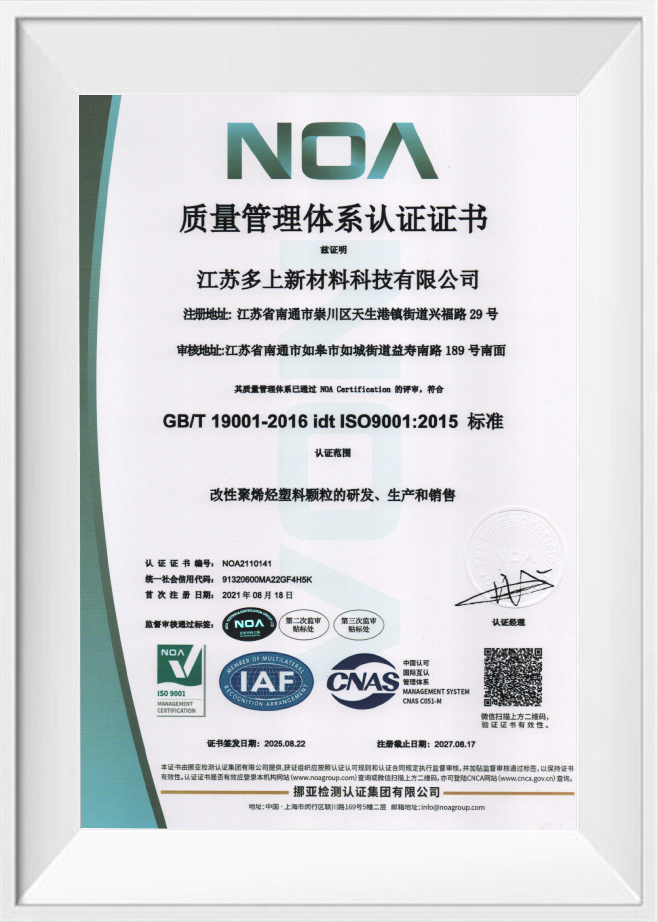
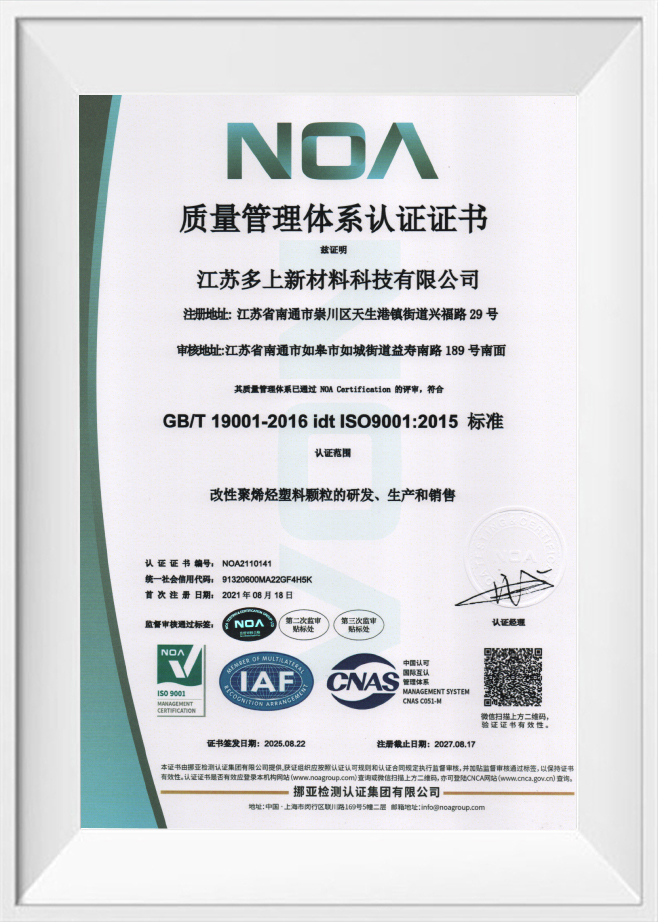
The company operates two production bases with over 15,000 square meters of production area and more than 10 polyolefin compound lines. The R&D center applies strict 6S management and works within an ISO 9001 quality management system. For overseas projects, we provide TDS, SDS, product specifications and relevant test and certification documents to support material evaluation and approval.
Project documentation: we combine compound specifications with the project's required standards and acceptance criteria, so the technical evaluation is based on the same document set used for the final cable approval.
Information We Use to Configure Your Solution
Every Duoshang proposal starts from the working point rather than a generic grade. To prepare a suitable configuration and quotation, we use the following project inputs:
- Applicable cable standard and required reaction-to-fire class, such as B1/B2, IEC or GB/T criteria.
- Conductor material, cross-section, insulation thickness and target cable construction.
- Planned extrusion line speed and UV curing configuration.
- Required mechanical, electrical, smoke and halogen properties.
- End-use environment, including indoor/outdoor service, temperature range and voltage class.
- Estimated order volume, packaging preference and delivery destination.
Frequently Asked Questions
What is UV Crosslinked LSZH Compound used for?
It is used mainly for insulation of small- to medium-section cables in residential wiring and conventional power distribution lines for small- to medium-sized public buildings. It provides low smoke, zero halogen and flame-retardant performance while enabling fast UV crosslinking during extrusion.
How does UV crosslinking compare with electron-beam and silane crosslinking?
UV crosslinking is an in-line process with lower equipment investment and high production efficiency, well suited to thinner insulation walls. Electron-beam crosslinking is more practical for thicker walls and higher temperature classes. Silane crosslinking uses moisture after extrusion and avoids the need for irradiation equipment.
Do you supply UV Crosslinked LSZH material for Class B1/B2 construction cables?
Yes. Our representative grade is UV Irradiation Cross-linked LSZH Flame Retardant Insulation for Construction Engineering (Class B1/B2), positioned for construction engineering cables with improved fire reaction and low-smoke zero-halogen performance.
What documentation do you provide for overseas projects?
We provide TDS, SDS, product specifications and relevant test and certification documents as required by the project. This supports material evaluation, cable type testing and final approval.
What information is needed for a quotation?
The most useful inputs are the cable standard, conductor size, insulation thickness, line speed, target fire class and end-use environment. With these, we can recommend the correct compound and configuration for the production line.

 English
 Français
 Español
 русский
 عربى