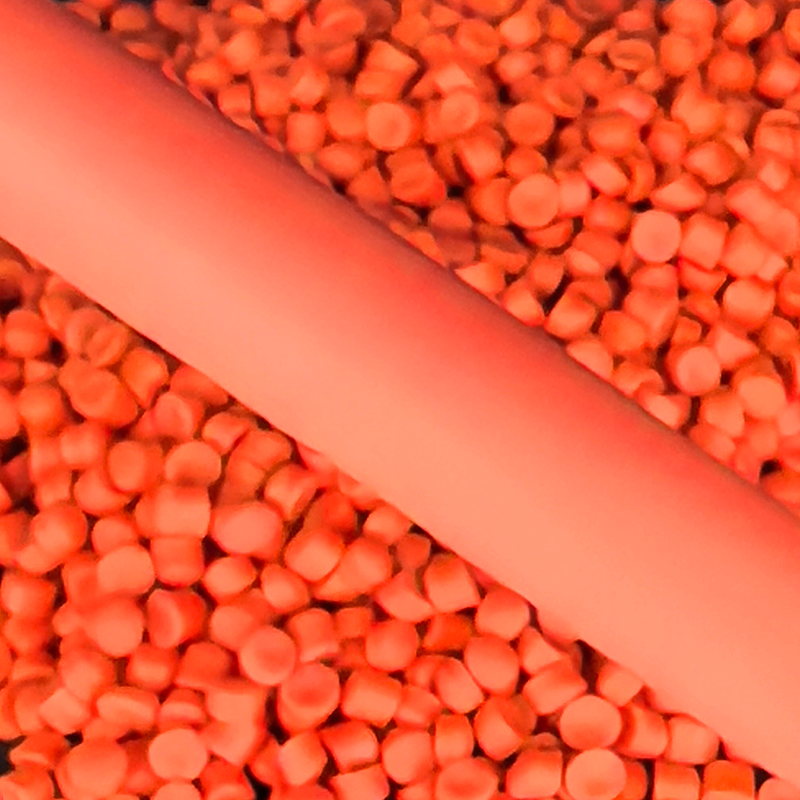
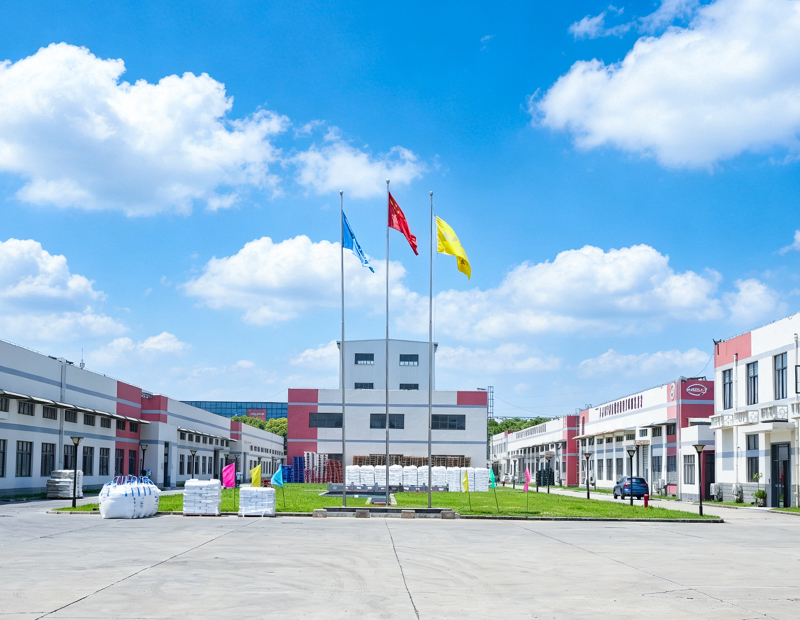
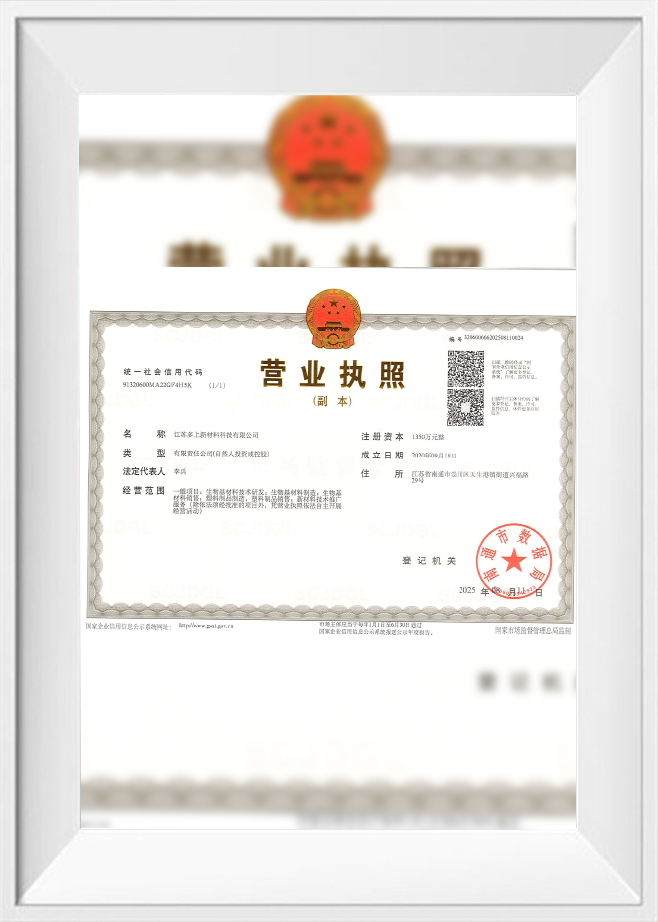
Jiangsu Duoshang New Materials Technology Co., Ltd. is a Thermoplastic LSZH Sheathing Compound manufacturer and supplier based in Nantong, Jiangsu Province. We formulate, compound and pelletize thermoplastic low-smoke halogen-free sheathing materials for cable projects that need flame retardancy and low smoke without an additional crosslinking step. Our portfolio covers standard LSZH sheath materials, Class B1/B2 grades for construction, grid and rail projects, optical cable sheathing and tight-buffered materials, and flame-retardant PE sheathing for wind power.
The range sits inside our broader LSZH Compound family. Because the material is thermoplastic, cable producers can extrude it directly on conventional equipment, achieve a smooth formed surface and avoid the curing or grafting step used for cross-linked systems.
Direct-Extrusion Sheathing for Cable Projects
Thermoplastic LSZH sheathing compounds are designed as the outer protective layer for cables where the final jacket must not require crosslinking after extrusion. The melt is applied directly, cooled and wound, giving the cable line a faster processing route and simpler process control than cross-linked systems. The material also provides good mechanical strength, oil resistance, abrasion resistance, weatherability and aging resistance over the cable service life.
We position this range for power cables, communication optical cables, marine cables, railway rolling stock cables and new energy control cables. Where the project specification demands stricter building-fire behavior, we supply B1/B2 formulations from the same thermoplastic sheathing platform.
What Our Thermoplastic LSZH Sheathing Range Covers
The current category includes the following application-matched products. Each is supplied as ready-to-use pelletized compound for cable extrusion.
| Range |
Application Fit |
Engineering Focus |
| Flame Retardant PE Sheathing Material for Wind Power Generation |
Wind farm power and control cables exposed to outdoor conditions |
Water resistance, mechanical toughness, flame retardancy and crack resistance |
| Tight-Buffered Material for Optical Fibers in Communication and Data Centers |
Tight-buffered optical fiber units and indoor data center cables |
Dimensional control, surface quality and consistent extrusion behavior |
| LSZH Flame Retardant Sheathing Material for Power Grids (Class B1/B2) |
Power cable jackets for grid supply projects with B1/B2 fire requirements |
Fire performance, low smoke, low corrosive gas and stable mechanical properties |
| LSZH Flame Retardant Sheathing Material for Construction Engineering (Class B1/B2) |
Building and construction cables for commercial, public and residential projects |
Flame spread control, no flaming droplets and low smoke generation |
| LSZH Flame Retardant Sheathing Material for Rail Transit (Class B1/B2) |
Rolling stock, railway signalling and transit system cables |
Abrasion and oil resistance combined with B1/B2 fire performance |
| Optical Fiber Cable Sheathing Material for Communication and Data Centers (Class B1/B2) |
Optical cables in telecom infrastructure and data centers |
Low smoke and halogen-free behavior with smooth, consistent sheathing |
Choosing Standard LSZH or B1/B2
Not every project requires a B1/B2 classification. Standard thermoplastic LSZH is the right baseline when the cable specification requires low-smoke, halogen-free behavior but does not set a demanding heat-release or flame-spread limit. B1/B2 grades are formulated for stricter fire scenarios: lower heat release, reduced smoke and corrosive emissions, and no flaming droplets during combustion.
- Use standard grades for communication cables, control cables and general equipment where fire class is not specified.
- Use B1/B2 grades for construction engineering, power grids, rail transit and public infrastructure.
- Use flame-retardant PE sheathing for wind power and new energy installations with high mechanical and weather exposure.
- Use optical fiber sheathing or tight-buffered materials for fiber structures in telecom and data center networks.
Engineering Value from Formula to Factory
Our formulation work starts with the cable structure, the processing method, the applicable standard and the service environment. The R&D center at our Nantong headquarters covers more than 3,000 square meters, with more than 35 million RMB of analytical and testing equipment and a research team of more than 30 people. We use that capability to match the base polyolefin, flame-retardant filler system and additive package to the project requirement rather than supplying a generic compound.
Production is carried out across two bases totaling more than 15,000 square meters, with more than 10 polyolefin cable compound lines. That gives us the ability to supply consistent pellet lots for projects that require repeatable processing and stable mechanical properties.
Quality Assurance and Project Documentation
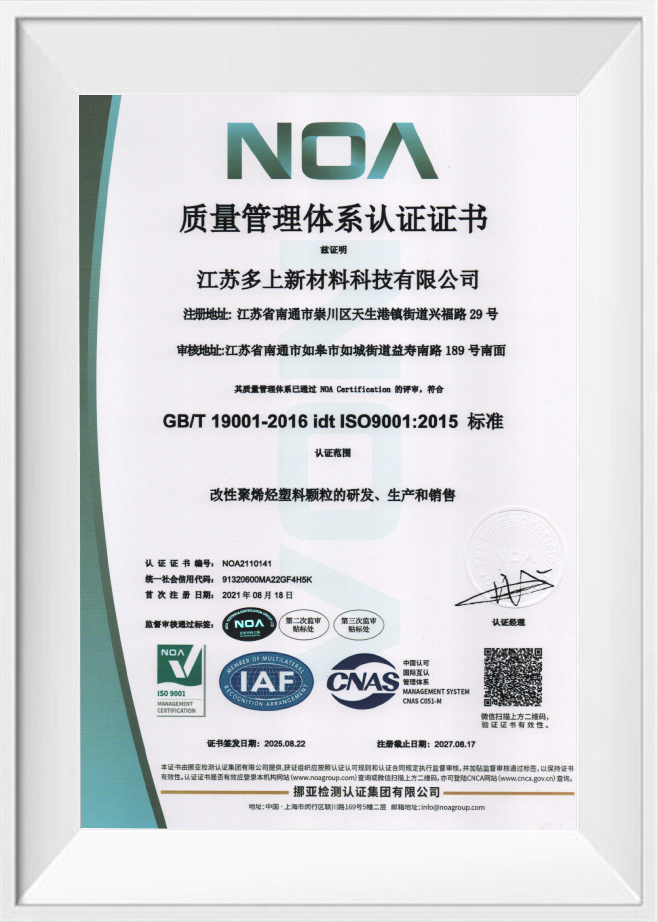
The R&D center applies 6S management, and our quality management system follows ISO 9001 requirements. For overseas clients, we provide the technical documentation needed to evaluate and accept a material: TDS, SDS, product specifications and relevant test and certification documents required by the project. We can also supply batch-related data as part of material delivery.
Information We Use to Configure Your Solution
- Applicable cable standard, fire classification and project specification, including B1/B2 requirements where relevant.
- Sheath construction: cable diameter, wall thickness, layer structure and whether the sheath is over fibers, cores or armor.
- Service environment: indoor or outdoor, UV exposure, temperature range, oil, chemical, marine or abrasive conditions.
- Processing details: extruder screw design, barrel length, line speed, cooling capacity and color masterbatch compatibility.
- Target color, pellet size, packaging format and delivery quantity.
- Required documentation: TDS, SDS, type-test reports, batch certificates and compliance documents.
Handling, Installation and Acceptance
All thermoplastic LSZH sheathing compounds are delivered as ready-to-extrude pellets. Store them in a dry, covered warehouse and keep opened packaging sealed to avoid contamination and moisture pickup. If a bag has absorbed moisture, use the drying recommendation in the corresponding TDS before extrusion.
During acceptance, the key checks are pellet uniformity, contamination level, color consistency and the mechanical or fire property values specified for the project. We align our release testing with the requirements in the material specification so the delivered lot matches the performance used in cable type approval.
Frequently Asked Questions
Can thermoplastic LSZH sheathing be extruded without crosslinking equipment?
Yes. The material is designed for direct extrusion on standard thermoplastic cable lines. No silane curing, UV curing or irradiation step is required, which simplifies line layout and process control.
What is the difference between standard LSZH and B1/B2 grades?
Standard LSZH provides low-smoke, halogen-free behavior. B1/B2 grades are formulated for stricter fire scenarios, with lower heat release, reduced smoke and corrosive emissions, and no flaming droplets. We recommend the B1/B2 grade when the project specification sets those limits.
What processing information do you need for a recommendation?
We use the cable standard, fire classification, sheath dimensions, service environment and line setup. Details such as screw design, line speed, cooling length and color masterbatch help us confirm the correct grade and pellet design.
Do you provide documentation for cable approval projects?
Yes. We supply TDS, SDS, product specifications and relevant test and certification documents for overseas and domestic projects. For B1/B2 applications, the material specification and fire performance data are included in the technical package.
How should the material be stored?
Keep the pellets dry, protected from direct rain and stored away from heat sources. Sealed original packaging is preferred, and opened bags should be re-closed to prevent contamination.

 English
 Français
 Español
 русский
 عربى