English
 Français
 Español
 русский
 عربى
Green Ohm
Green Ohm
Green Ohm
Green Ohm
Green Ohm
Green Ohm
Green Ohm
Green Ohm
Green Ohm
Content
Ask ten engineers what a TPE compound is and you will get ten slightly different answers, because the term describes a broad family of materials rather than a single recipe. In plain terms, a TPE compound is a thermoplastic elastomer blended with oils, fillers, stabilisers, flame retardants and colourants to reach a defined balance of softness, strength, heat resistance and processing behaviour. In the finished part it flexes and feels like rubber; inside the machine it flows and sets like plastic.
We are a compounding house based in Nantong, Jiangsu, and our daily work is polyolefin cable compounds. That means we spend our time on exactly the questions TPE formulators face: how much filler a polymer will swallow before it turns brittle, how a melt behaves inside an extruder, and what happens after ten years of heat, moisture and sunlight. This article gathers the practical side of TPE compounds, from the main chemistry families to the small details that decide whether a project runs smoothly.
What Actually Makes a TPE a TPE
Traditional rubber needs vulcanisation. Long chains are tied together with covalent crosslinks during a curing step, and once that reaction is finished the material cannot be melted and reshaped. Thermoplastic elastomers take a different route. They rely on physical crosslinks: hard segments, such as polystyrene domains, crystalline polyester blocks or polyamide blocks, that hold the soft rubbery chains in place at service temperature but soften and flow when the material is heated.
That single design decision explains most of the behaviour people notice. TPE compounds can be injection moulded, extruded, blow moulded and even printed, often on equipment that already exists in the plant. Production scrap and end-of-life parts can, in many cases, be reground and reprocessed. The compromise is that the same physical bonds that make TPE easy to melt also make it more sensitive to heat, more prone to creep under sustained load and generally weaker in compression set than a fully vulcanised rubber.
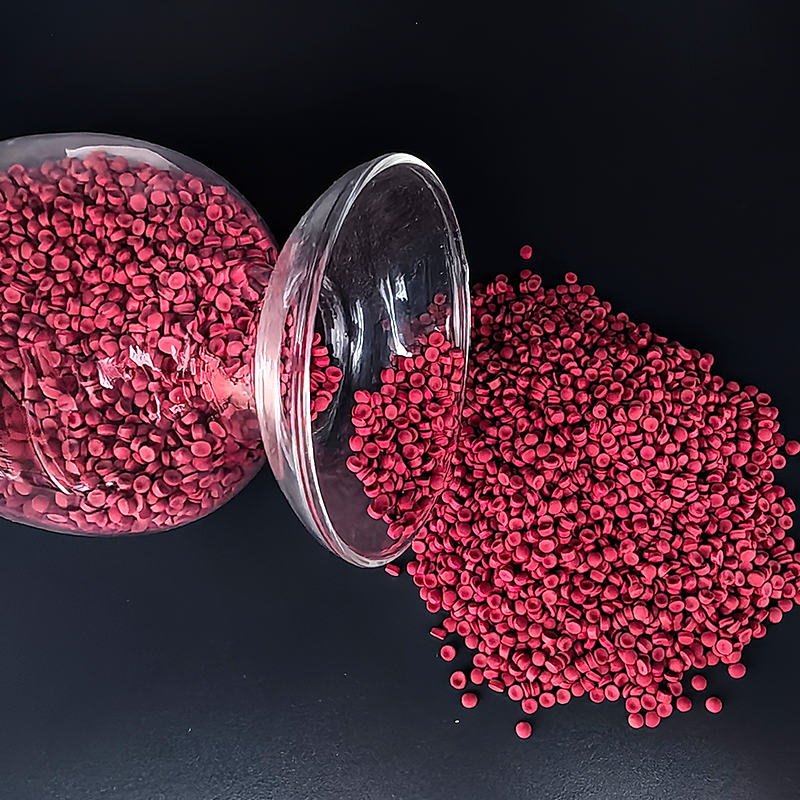
It is also worth separating the polymer from the compound. A base elastomer like SEBS or TPU is only the starting point. Paraffinic oils soften it, mineral fillers lower cost and raise flame resistance, stabilisers protect it during processing and service, and colourants, lubricants and coupling agents fine-tune appearance and flow. Two suppliers can start from the same polymer and deliver compounds that behave like different materials.
The Main TPE Families at a Glance
The six families below cover the vast majority of commercial TPE work. The numbers are indicative windows rather than specification limits, because a formulation can shift hardness, temperature resistance and chemical resistance considerably.
| Family | Hardness window | Continuous service temperature | Oil and solvent resistance | Typical uses |
|---|---|---|---|---|
| Styrenic block copolymers (TPS, SEBS, SBS) | Shore A 10 to 90 | Around 100 to 120 °C | Poor | Soft grips, seals, elastic films, overmoulding |
| Thermoplastic polyolefin (TPO) | Shore A 60 to Shore D 60 | Around 100 to 120 °C | Poor to fair | Automotive trim, bumpers, general sheeting |
| Vulcanised polyolefin (TPV) | Shore A 55 to 90 | Up to about 135 °C | Fair | Weather seals, hose covers, glazing profiles |
| Thermoplastic polyurethane (TPU) | Shore A 70 to Shore D 75 | Around 90 to 120 °C | Excellent | Cable jacketing, hose, wheels, wear parts |
| Copolyester TPE (TPC-ET) | Shore D 30 to 70 | Up to about 150 °C | Very good | Bellows, boots, dynamic seals |
| Polyamide TPE (TPA, PEBA) | Shore D 25 to 70 | Up to about 160 °C | Very good | Sports gear, medical tubing, thin-wall parts |
The pattern is easy to remember: styrenic systems win on softness, feel and cost; polyolefin systems win on weathering and value; urethane, copolyester and polyamide systems win where heat, abrasion or oil resistance matters most.
Why Designers Reach for TPE Compounds
- Processing on standard injection moulding and extrusion lines, with no curing stage and short cycle times.
- Scrap and reject parts that can often be reground, which reduces waste on high-volume programmes.
- A very wide hardness range, from gel-soft to semi-rigid, using one material family.
- Overmoulding onto rigid substrates such as polypropylene, ABS, polycarbonate or polyamide for soft-touch surfaces.
- Good colour control and surface finish, including matte and textured effects.
- Formulations available with low fogging and low odour for enclosed interior applications.
- Halogen-free flame-retardant grades that support low smoke and low toxicity requirements.
Where TPE Compounds Are Used
Automotive is the largest single market: seals, gaskets, interior skins, mats, air ducts and soft-touch trim. Medical devices use them for tubing, seals, syringe components and flexible housings, often with grades that tolerate sterilisation. Consumer goods take advantage of the soft feel for grips, toothbrushes, tools and footwear. Industrial applications include conveyor belts, roofing membranes, hose covers and vibration damping pads.
Cable and wire is another natural home, and it is the area where our own experience is deepest. Flexible cords, control cables and specialty jacketing all benefit from a material that stays pliable at low temperature while resisting abrasion and flame spread. You can see the range of industries we supply on our application overview, which covers construction, power grids, rail transit, wind power and communications.
TPE Compounds in Cable and Wire
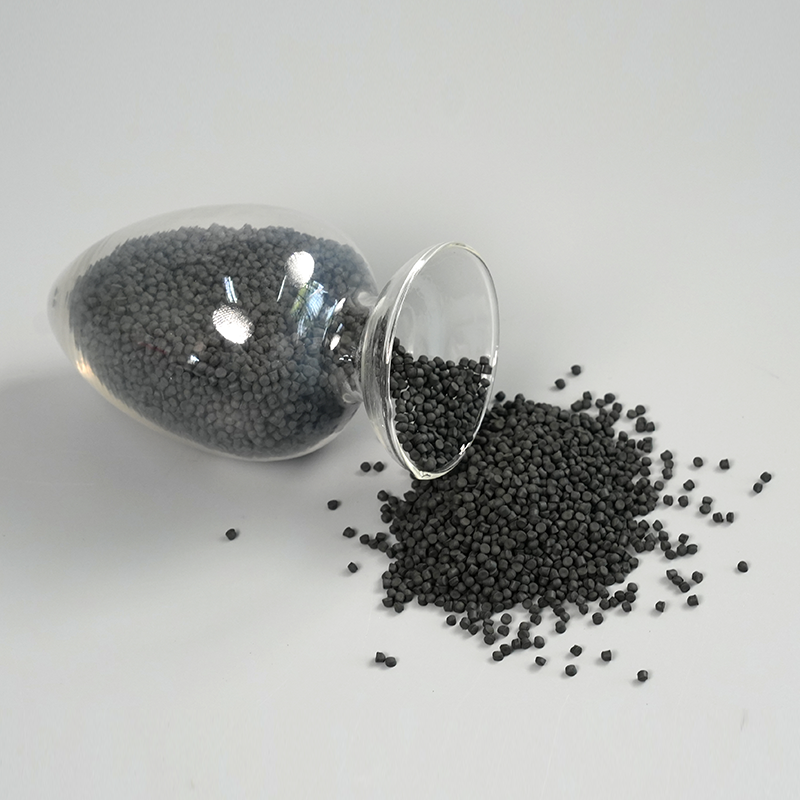
Halogen-free flame-retardant cable compounds are built on the same balancing act as any TPE: a polymer base, a heavy load of mineral filler such as aluminium trihydroxide or magnesium dihydroxide, and a package of additives that keeps the melt extrudable. Load the filler high enough to pass a fire test and the compound stiffens; soften it with oil and the flame performance drops. Finding that window is the whole job.
From there, the formulator chooses a network. A purely thermoplastic compound keeps the cable flexible and simple to recycle, which suits many sheathing duties. Where higher temperature ratings or better deformation resistance are needed, crosslinking takes over, whether by an accelerator irradiation line, a silane moisture-cure route or UV irradiation, and the underlying chemistry decides the final balance. If you want the mechanism in more detail, our note on how crosslinking works walks through it step by step.
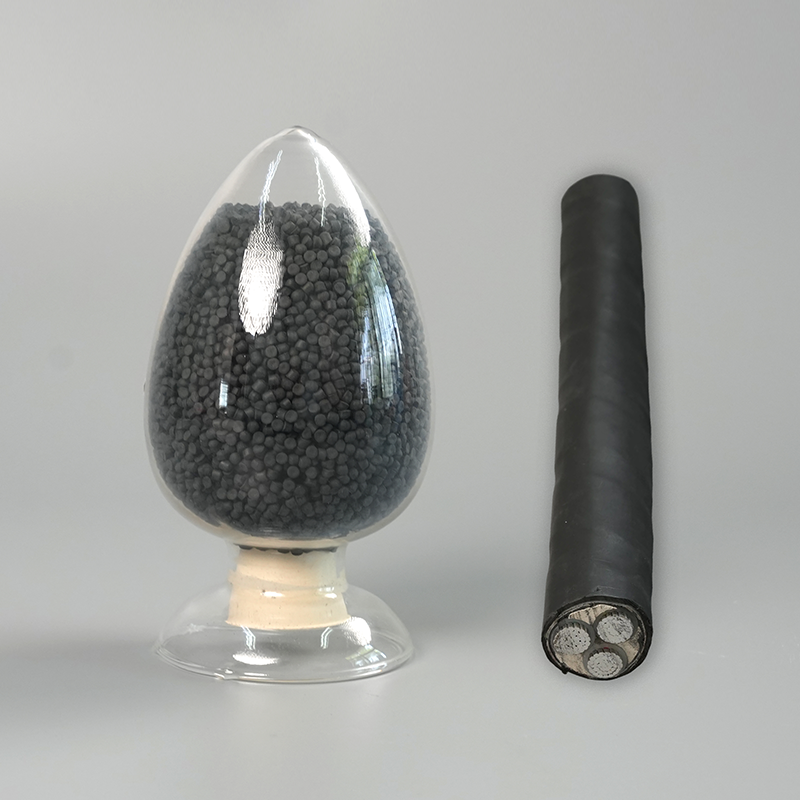 Thermoplastic LSZH Sheathing Compounds for Cable ExtrusionReady-to-extrude, non-crosslinked polyolefin sheathing grades for power, communication, marine, rail and new-energy cables, with B1/B2 flame-retardant options.View Product →
Thermoplastic sheathing compounds illustrate the trade-off neatly. Because there is no crosslinked network, the material stays remeltable and the extrusion window is wide, but the compound must be formulated carefully to hold its shape under load and still meet the relevant fire classification, such as the B1 and B2 classes used in building cables.
Application decides the rest. Wind power cables face constant flexing, ozone and temperature swings, so a tough flame-retardant polyethylene sheathing is a common answer.
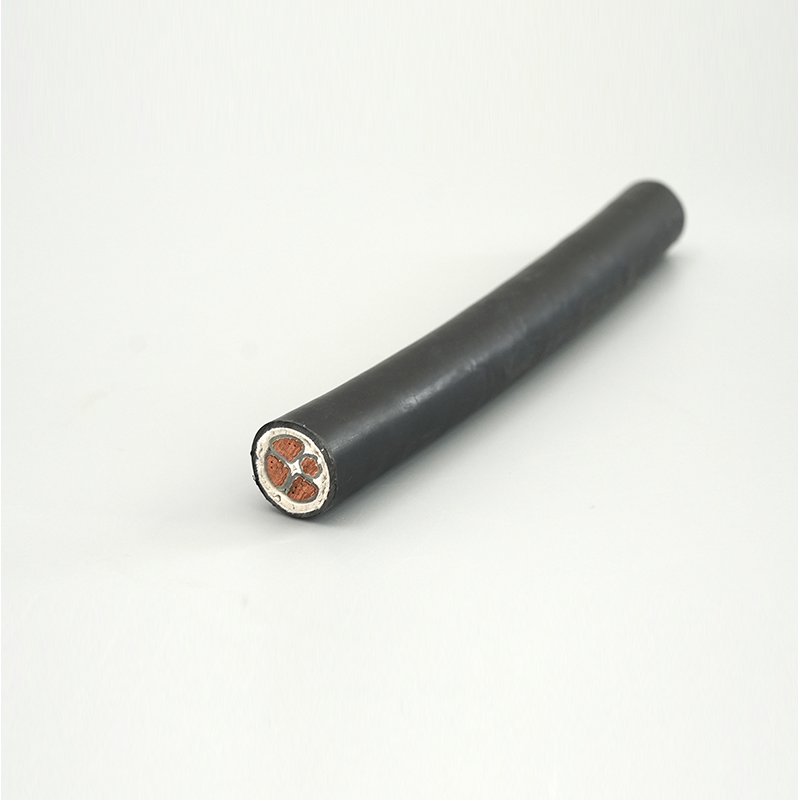 Flame-Retardant PE Sheathing Material for Wind Power GenerationTwin-screw granulated DS-ZPE grades offer waterproof, mechanical, crack, UV and aging resistance for wind power cables in harsh outdoor climates.View Product →
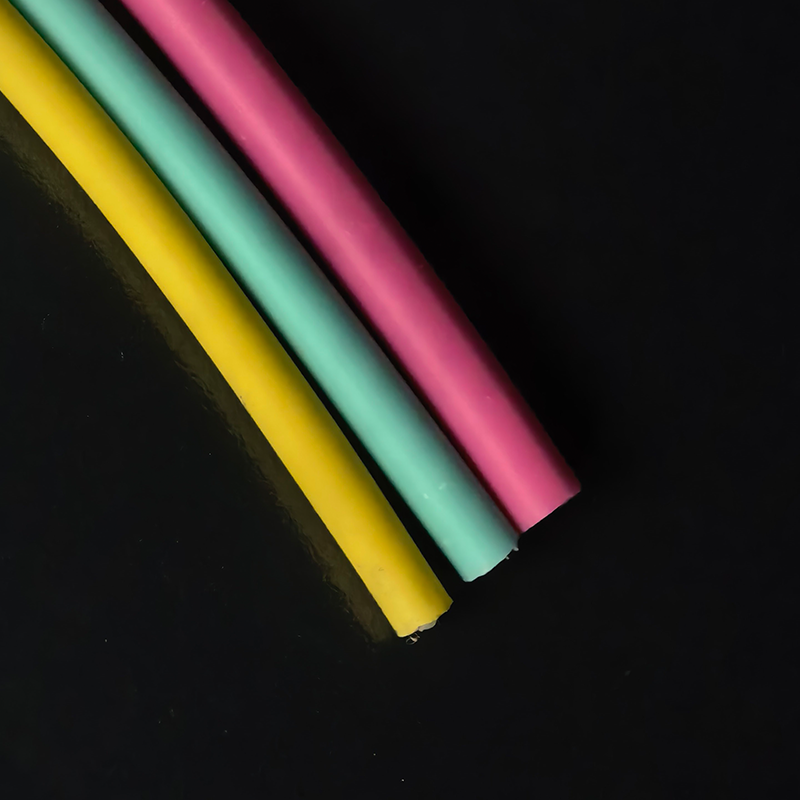
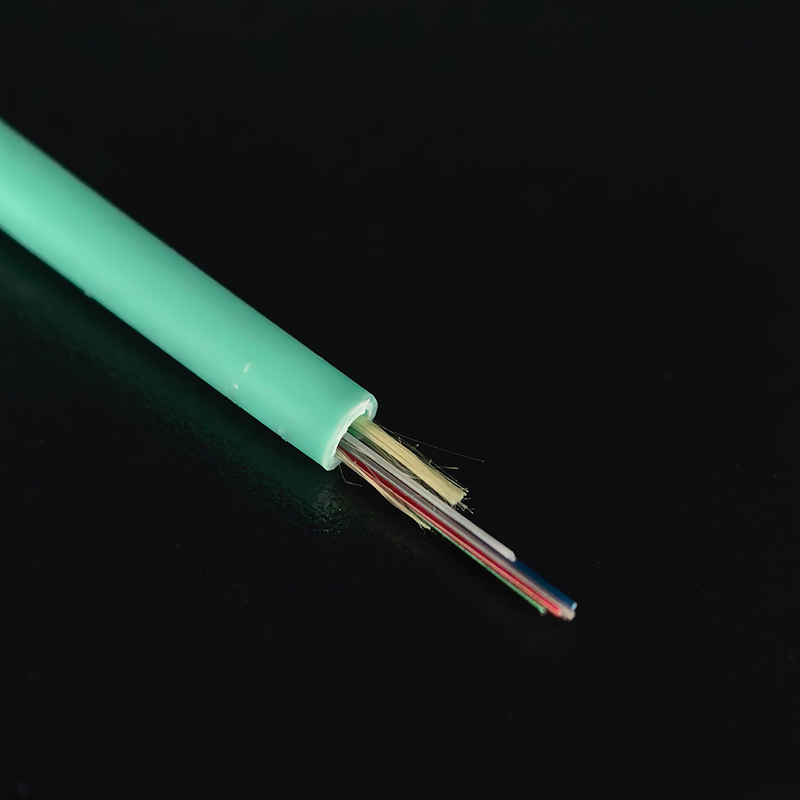
Communication and data centre cabling asks for something different again: tight dimensional control, low shrinkage and clean surfaces for optical fibre protection.
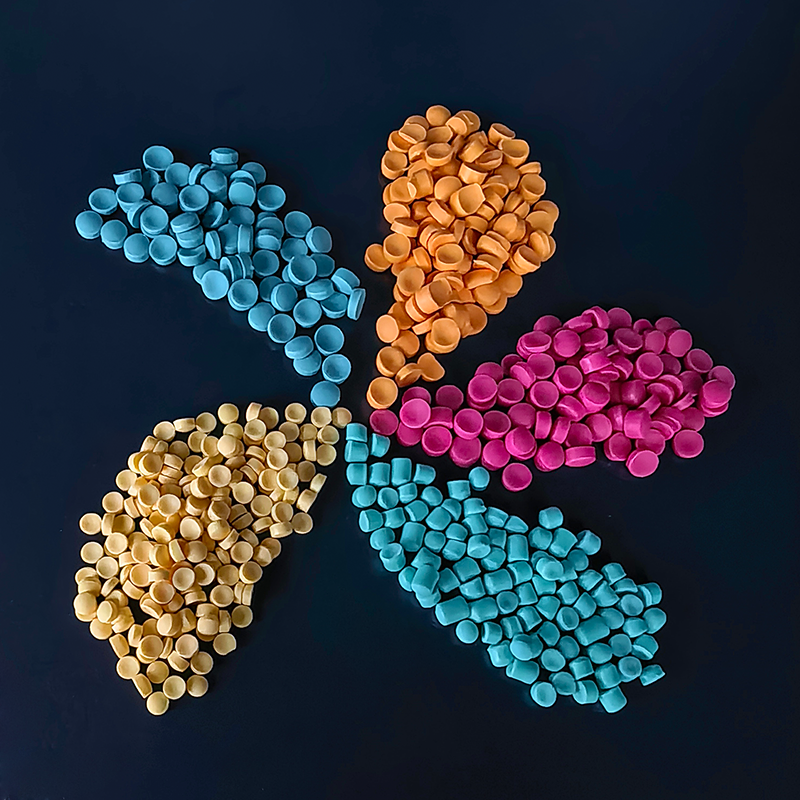 LSZH Optical Fiber Cable Sheathing for Communication and Data CentersLow-smoke halogen-free B1/B2 compound for IDC, base-station and indoor fibre cabling, supporting clean optical-fibre protection and reduced fire spread.View Product →
Choosing a TPE Compound: A Practical Checklist
Most selection mistakes come from optimising one property and ignoring the rest. Work through this list before you commit to a grade.
- Service temperature, split into continuous, peak and short-term excursion values.
- Hardness and compression set under the actual load the part will see.
- Exposure to oils, fuels, acids, cleaning agents or hydraulic fluid.
- UV, ozone and weathering conditions for outdoor parts.
- Fire performance: flame spread, smoke density, halogen content and any class requirement.
- Process route and equipment, including melt temperature limits and drying capability.
- Compliance needs such as RoHS, REACH, UL recognition or medical biocompatibility testing.
- Colour, surface finish and any overmoulding bond to a rigid substrate.
- Regrind policy and the maximum recycled content the application allows.
- Supply consistency, lot-to-lot variation and the cost per finished part rather than per kilogram.
Processing Notes That Save Time
Drying is the first place projects stumble. Urethane, copolyester and polyamide TPEs absorb moisture and will show splay, bubbles or hydrolytic degradation if they are not dried to the supplier's recommended dew point. Styrenic and polyolefin-based compounds are far more forgiving, though they still benefit from dry storage.
Temperature windows are narrower than they look. Styrenic compounds are shear sensitive and prefer moderate screw speeds with gentle compression; TPU and copolyester grades prefer higher temperatures and short residence times. Additive plate-out on screws and moulds is usually a sign that processing temperatures have drifted or that the screw design is too aggressive. Finally, quote mould shrinkage from data measured on the actual grade, not from the base polymer, because filler and oil content move shrinkage noticeably.
Sustainability and the Circular Case
The strongest environmental argument for TPE compounds is simple: no vulcanisation means no irreversible network. Production scrap can go back into the machine, and many parts can be reprocessed at end of life instead of being landfilled. Halogen-free formulations also reduce the corrosive and toxic smoke load in a fire, which matters for tunnels, trains and high-rise buildings. That said, recyclability is only as good as the collection system behind it, so the honest position is that TPE compounds make circular routes possible rather than automatic.
TPE compounds are not a single answer to a materials problem; they are a toolbox. Once you know which family you are in, the hard part is the formulation detail: filler loading, stabiliser package, flame retardant system and processing window. That is compounding work, and it is what we do every day, mostly on the polyolefin and halogen-free side for cable makers. If you are weighing a thermoplastic route against a crosslinked one, or comparing sheathing options for a specific installation, send us the requirement and we will talk through the options that genuinely fit.