English
 Français
 Español
 русский
 عربى
Green Ohm
Green Ohm
Green Ohm
Green Ohm
Green Ohm
Green Ohm
Green Ohm
Green Ohm
Green Ohm
Content
If you have ever watched a cable extrusion line run, you know that the real magic happens after the polymer leaves the die. For polyolefin cable compounds, one of the most reliable ways to turn a soft, thermoplastic material into a durable, heat-resistant insulation or jacket is electron beam crosslinking. It is a clean, fast, and remarkably controllable process, and it has become a workhorse in the wire and cable industry.
At its core, e-beam crosslinking uses a beam of high-energy electrons to create a three-dimensional network inside the polymer. No peroxides, no moisture curing, no long ovens. Just electrons doing precise work at the molecular level.
What Electron Beam Crosslinking Actually Does
Electron beam crosslinking begins inside an accelerator. Electrons are generated, accelerated to high energy, and then scanned across the cable or the compound surface. When those electrons hit the polymer, they do not simply pass through. They transfer energy to the molecules, breaking carbon-hydrogen bonds and creating highly reactive free radicals.
Those free radicals do not stay lonely for long. On neighboring polymer chains, radicals combine to form covalent bonds. The result is a crosslinked network that links the chains together. The material can no longer flow when heated, and it gains a set of properties that thermoplastic polyolefins simply cannot match.
From Free Radicals to a Three-Dimensional Network
- The accelerator generates a focused beam of high-energy electrons.
- Electrons penetrate the polymer to a depth controlled by beam energy and material density.
- Energy transfer breaks C-H bonds and produces free radicals along the polymer chains.
- Radicals on adjacent chains combine, forming covalent crosslinks.
- The crosslinked network is locked in, and the cable can be cooled and processed.
Because the reaction is initiated by electrons rather than heat or chemicals, it can run at or near room temperature. That matters for compounds that contain heat-sensitive flame retardants or other additives. It also means the crosslinking step can be integrated directly into a continuous cable line.
Why Cable Makers Choose E-Beam Crosslinking
If you ask a cable engineer why they prefer e-beam crosslinking, you will hear a few consistent answers. First, the thermal performance jumps. A crosslinked polyolefin can operate at 125°C or higher, while the same thermoplastic compound might be limited to 70°C or 90°C. That opens the door to higher current-carrying capacity or thinner insulation walls.
Second, the mechanical properties improve. Crosslinked insulation resists abrasion, cut-through, and creep. It holds its shape under stress and performs better in flexing and bending applications. Third, the process is clean. There are no peroxide residues, no moisture curing steps, and no long curing ovens. For low-smoke, halogen-free compounds, that cleanliness is a real advantage because the formulation is already packed with fillers that can be sensitive to heat and moisture.
It is also worth comparing e-beam crosslinking with the other common methods. Each has its place, but they are not interchangeable.
| Crosslinking Method | Trigger | Additives Needed | LSZH Suitability | Key Trade-off |
|---|---|---|---|---|
| Peroxide | Heat | Peroxide | Good | Can affect color, odor, and scorch safety |
| Silane | Moisture | Silane graft and catalyst | Good | Requires moisture curing time and humidity control |
| UV | Ultraviolet light | Photoinitiator | Limited | Works best in thin sections; opacity is a challenge |
| E-beam | High-energy electrons | None required | Excellent | Needs accelerator access and thickness control |
Notice that e-beam crosslinking does not require a chemical crosslinking agent. That is a big deal for low-smoke, halogen-free formulations. The compound can be designed around flame retardancy and smoke suppression first, then crosslinked without adding another reactive ingredient that might interfere with those properties.
E-Beam Crosslinking and LSZH Cable Compounds
Low-smoke, halogen-free compounds are a perfect example of why e-beam crosslinking matters. To meet fire performance standards, LSZH formulations often contain high loadings of mineral fillers such as aluminum hydroxide or magnesium hydroxide. Those fillers are excellent at suppressing smoke and flame, but they can make the compound stiff, brittle, and difficult to process. Crosslinking helps restore the balance.
When an LSZH compound is crosslinked, the polymer matrix becomes a network that holds the fillers in place and distributes stress more effectively. The result is a material that can pass rigorous fire tests while still meeting the mechanical and thermal demands of real cable installations. This is why e-beam crosslinked LSZH compounds are widely used in construction wiring, power grids, and rail transit.
 Accelerator Irradiation Cross-linked LSZH Construction Insulation, Class B1/B2For construction wiring needing B1/B2 fire performance in bundled cables, this electron-beam crosslinked LSZH insulation combines low-smoke, halogen-free flame retardancy with cable-standard compliance.View Product →
For construction projects, the goal is often a B1 or B2 fire rating with reliable performance in bundled cables. A crosslinked insulation compound can deliver the required flame retardancy without sacrificing flexibility or long-term stability.
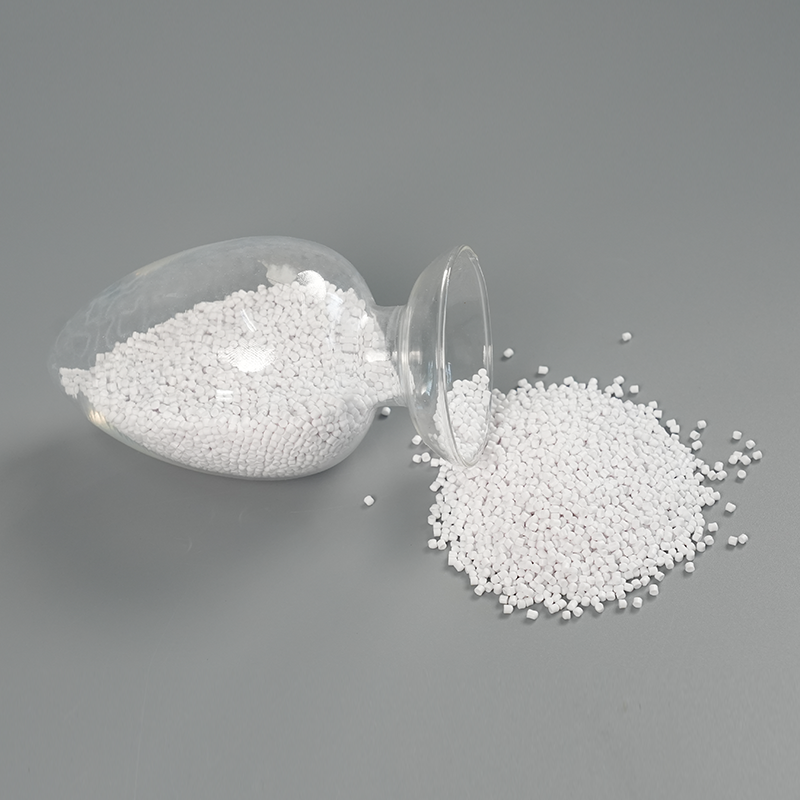 Accelerator Irradiation Cross-linked LSZH Insulation for Power GridsFor power grid cables facing higher voltages, continuous loads, heat, and moisture, this crosslinked LSZH compound supports electrical integrity, thermal stability, and flame retardancy.View Product →
Power grid applications bring a different set of demands. Cables must handle higher voltages, continuous loads, and exposure to heat and moisture. Crosslinked LSZH insulation helps maintain electrical integrity and thermal stability over decades of service.
 Accelerator Irradiation Cross-linked LSZH Insulation for Rail TransitFor rail transit cables in enclosed vehicles and tunnels, this crosslinked LSZH insulation targets low smoke, toxicity, flame retardancy, and resistance to vibration and abrasion.View Product →
Rail transit adds fire safety, vibration, and space constraints. Crosslinked LSZH compounds are used in rolling stock and along tunnels, where smoke density and toxicity are strictly regulated. The same crosslinking technology also supports wind power, photovoltaic, and communication cable designs.
If you want to go deeper into the chemistry and practical selection of crosslinked compounds, our article on crosslinked cable compounds: how crosslinking works and why it matters is a good next stop. You can also browse the broader application overview to see how these materials are matched to different cable environments.
How the E-Beam Process Is Controlled
E-beam crosslinking is not a black box. The process is controlled by a handful of variables that determine whether the final cable meets its specification. The most important are dose, beam energy, and line speed.
Dose, Energy, and Coverage
- Dose: Measured in kilograys (kGy), dose is the amount of energy absorbed by the material. Too little dose means incomplete crosslinking; too much can degrade the polymer.
- Beam energy: Measured in megaelectronvolts (MeV), this determines how deeply the electrons penetrate. Thicker insulation needs higher energy or multiple passes.
- Line speed: Faster lines reduce the dwell time under the beam, so dose and speed must be balanced to achieve the target crosslink density.
- Dose uniformity: The beam does not deliver a perfectly flat dose from surface to core. Engineers use dose uniformity ratio (DUR) to ensure the whole cross-section receives enough energy.
- Oxygen control: Oxygen can interfere with radical reactions near the surface, so some processes use inert atmospheres or careful beam tuning.
Quality Checks That Matter
After crosslinking, a few tests tell you whether the process worked. Gel content measures the percentage of insoluble polymer and is a direct indicator of crosslink density. Hot-set and hot-elongation tests show how the material behaves under heat and load. Tensile tests before and after aging confirm that the compound has not embrittled. For LSZH compounds, smoke density, flame spread, and electrical properties are also verified.
Good compound suppliers provide a dose window and processing guidance, not just a data sheet. That guidance helps cable makers avoid the two most common failure modes: under-crosslinking, which leads to poor heat resistance, and over-crosslinking, which can make the insulation brittle.
Choosing a Compound Partner for E-Beam Crosslinking
Not every polyolefin compound is formulated for e-beam crosslinking. The base resin, filler package, stabilizers, and processing aids all influence how the material responds to electron radiation. A compound that looks good on paper may crosslink unevenly or lose mechanical strength if it is not designed for the process.
This is where experience matters. At Jiangsu Duoshang New Material Technology, we focus on polyolefin cable compounds for insulation and sheathing, including irradiation crosslinked, silane crosslinked, UV crosslinked, and thermoplastic LSZH systems. Our team works with cable manufacturers to match the compound to the accelerator, the line speed, and the target fire rating. We operate two production bases with more than 10 polyolefin cable compound lines, and our R&D center is equipped to test crosslink density, thermal performance, and flame behavior.
When you are specifying an e-beam crosslinked compound, ask for the dose response curve, the recommended gel content range, and any sensitivity to line speed or thickness. A supplier who can talk through those details will save you a lot of trial and error on the production floor.
E-beam crosslinking is one of those technologies that quietly makes modern cables better. It improves heat resistance, mechanical strength, and fire performance without adding chemical crosslinking agents. For LSZH compounds, it is often the difference between a formulation that meets the standard and one that performs reliably for years.
If you are working on a cable project and want to explore e-beam crosslinkable LSZH compounds, reach out to our team. We are always happy to talk through the details and help you find the right material for your application.