English
 Français
 Español
 русский
 عربى
Green Ohm
Green Ohm
Green Ohm
Green Ohm
Green Ohm
Green Ohm
Green Ohm
Green Ohm
Green Ohm
Content
E-beam is one of those terms that cable engineers mention often but rarely stop to explain. In cable manufacturing, e-beam refers to electron beam crosslinking, a process that uses high-energy electrons to modify the structure of polymer compounds. We work with polyolefin cable materials every day, and we have seen how e-beam technology can make insulation and sheathing significantly more reliable. In this guide, we will walk through what e-beam is, how it works, and why it matters for cable performance.
What Is E-Beam Crosslinking in Cable Manufacturing?
E-beam stands for electron beam. In cable production, it is a form of radiation processing used to crosslink the polymer chains in insulation or sheathing materials. Most conventional polyolefin compounds start as thermoplastics, which means they soften and flow when heated. During e-beam processing, the cable passes through a controlled beam of accelerated electrons. These electrons create active sites in the polymer, and those active sites bond with each other to form a three-dimensional network.
The result is a thermoset material. Once crosslinked, the compound no longer melts or deforms at high temperatures. This simple change in molecular structure is why e-beam treated cables can handle higher operating temperatures, more demanding short-circuit conditions, and tougher mechanical environments.
For cable manufacturers, the practical meaning of e-beam is not just a machine on the production floor. It is a design choice that affects the whole cable system, especially when the insulation is a low-smoke, halogen-free compound.
How the E-Beam Process Works
In an industrial electron beam line, an extrusion process first applies the insulation or sheathing compound onto the conductor or cable core. The completed cable then passes under an electron accelerator, where it receives a controlled dose of ionizing energy. The accelerator scans the cable surface, and the electrons penetrate into the polymer layer, breaking and reforming atomic bonds as they pass through.
Several parameters matter. The dose, measured in kilogray, determines how many crosslinks form. The beam energy determines how deeply the electrons can penetrate. The line speed controls how long the material is exposed. Compound manufacturers also adjust the material itself so that it responds consistently to this radiation step.
Not every polymer reacts in the same way. The base resin, antioxidant package, flame retardant fillers, and processing aids all influence the final crosslinking result. That is why an e-beam cable compound needs to be designed from the start for radiation crosslinking, not simply extruded and later passed under a beam as an afterthought.
If you would like a closer look at the chemistry, our article on how crosslinking works and why it matters covers the fundamentals in more detail.
Why Cable Manufacturers Choose E-Beam Crosslinked Compounds
The main reason cable manufacturers specify e-beam crosslinked materials is that they offer a combination of properties that is difficult to achieve with thermoplastic insulation alone.
- Higher thermal rating. Crosslinked compounds can be rated for continuous operating temperatures up to 125°C, with better short-circuit overload behavior.
- Improved mechanical strength. Crosslinking improves tensile strength, abrasion resistance, and flexibility retention, even after prolonged thermal aging.
- Better chemical and environmental resistance. The three-dimensional structure resists oils, solvents, moisture, and stress cracking better than uncrosslinked alternatives.
- Enhanced fire safety. In low-smoke, halogen-free formulations, e-beam crosslinking helps maintain dimensional stability during a fire, reducing the chance of cable failure.
- Reduced wall thickness. Because the material is stronger, designers can often use a thinner insulation wall while still meeting electrical and mechanical requirements. This can reduce cable weight and overall diameter.
These benefits are especially valuable when cables are installed in confined spaces, high-rise buildings, tunnels, and other areas where replacing a cable is expensive or disruptive.
E-Beam vs. Other Crosslinking Methods
E-beam is not the only crosslinking route in the cable industry. Silane crosslinking and UV crosslinking are common alternatives, and thermoplastic compounds are still the right choice in some applications. The table below summarizes their main differences.
| Method | Activation Method | Typical Advantages | Typical Applications |
|---|---|---|---|
| E-beam | High-energy electrons from an accelerator | Fast, continuous processing; no moisture cure step; deep penetration; good for thick walls | Industrial cables, rail, grid, renewable energy |
| Silane | Moisture after extrusion | Lower capital cost; familiar technology; works well with standard extrusion lines | Building wire, general low-voltage cables |
| UV | Ultraviolet light | Compact line, low energy use, suitable for thin-wall constructions | Certain construction and specialty cables |
Each method has its own place. E-beam is often preferred when manufacturers need consistency across long production runs and when the cable construction benefits from thorough crosslinking through thicker insulation layers.
Where E-Beam Crosslinked Cables Are Used
E-beam crosslinked compounds have become standard in many demanding cable applications. In building engineering, they are used for fire-resistant wiring where low smoke and halogen-free performance are required. In power grids, they appear in medium-voltage and low-voltage cables that need to survive overloads and thermal cycling. Rail transit systems specify them for onboard and wayside cables because they combine flame resistance with resistance to vibration and harsh environments.
- Construction and civil infrastructure: building wiring, riser cables, fire alarm circuits.
- Power distribution: feeder cables, grid connections, industrial plant wiring.
- Rail and transit: rolling stock wiring, trackside cable, tunnel installations.
- Renewable energy: wind farm cabling and solar plant wiring, where outdoor exposure and temperature swings are common.
- Communication and data centers: optical cable sheathing and tight-buffered materials that need stable performance over long lifetimes.
When a cable project requires a reliable combination of electrical, mechanical, and fire performance, e-beam crosslinked LSZH compounds are often among the first options we discuss.
You can explore the main markets we help supply in our cable application areas section.
What to Look for in an E-Beam Cable Compound
Choosing a compound for e-beam processing is more involved than simply checking the final cable specification. The material must be processable on standard extrusion equipment, respond to the accelerator dose in a predictable way, and still meet flame retardant and smoke requirements after crosslinking. From our perspective, a good e-beam compound is built on three pillars: consistent raw materials, balanced additives, and rigorous testing.
- Crosslinking response. The compound should reach the target degree of crosslinking at a practical dose, without becoming brittle or losing elongation.
- Thermal and fire performance. It should maintain its rated temperature class and meet the required flame, smoke, and halogen standards.
- Processing stability. The extrusion behavior should be stable before the beam step, so the final cable geometry is consistent.
For example, our 125°C accelerator irradiation crosslinked LSZH flame-retardant insulation was developed to give cable makers a dependable balance of these characteristics.
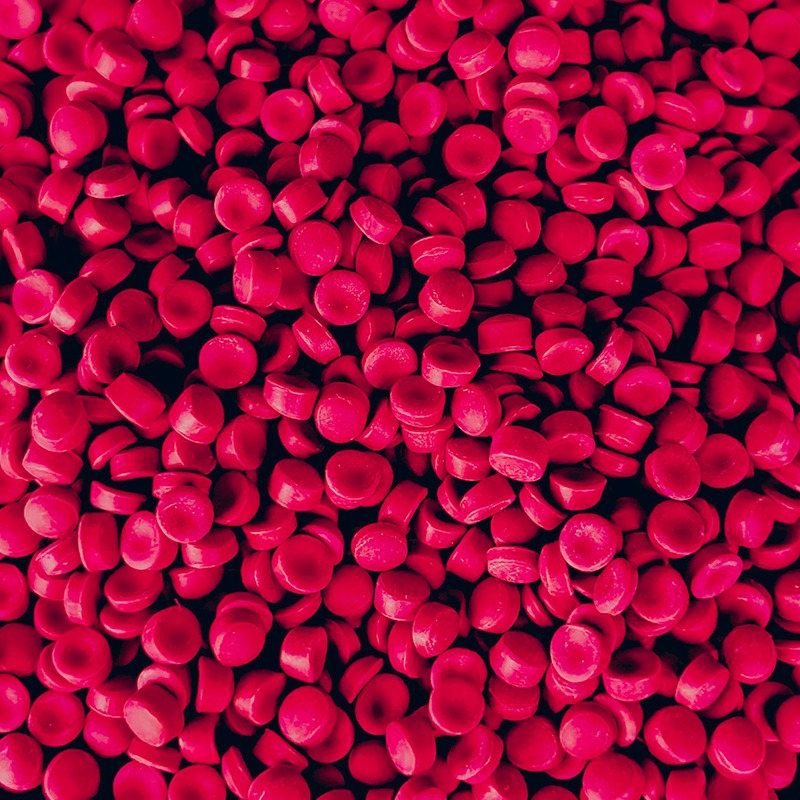 125°C Irradiation Cross-linked LSZH Compound for Photovoltaic CablesThis LSZH insulation and sheathing compound withstands 125°C and -40°C, offering UV, ozone, and acid resistance for reliable outdoor PV cable performance across 25 years.View Product →
In our R&D center, we evaluate not just the final tensile and electrical values but also the way the compound behaves under real production conditions. That experience helps us guide customers toward the right product for their line speed, accelerator capacity, and application environment.
The Bottom Line
E-beam crosslinking continues to be one of the most valuable tools in cable manufacturing. It improves thermal, mechanical, and safety performance without changing the cable design in a dramatic way. For compound suppliers and cable makers alike, understanding what e-beam can and cannot do is essential.
If you are planning a new cable product or trying to solve an application failure, it is worth looking at the material first. The right e-beam crosslinked compound can make the difference between a cable that barely meets the standard and one that performs reliably for decades. We have seen this in our own manufacturing experience, and it is why we remain committed to developing polyolefin compounds that make e-beam processing simpler and more effective for our customers.