English
 Français
 Español
 русский
 عربى
Green Ohm
Green Ohm
Green Ohm
Green Ohm
Green Ohm
Green Ohm
Green Ohm
Green Ohm
Green Ohm
Content
Open almost any modern cable specification and you will run into four letters that carry an outsized amount of responsibility: HFFR. The abbreviation stands for halogen-free flame retardant, and behind it sits a complete design philosophy — stop the flame from travelling along the cable, keep the smoke thin enough to see through, and make sure the gases released during a fire do not turn a difficult situation into a catastrophic one.
We have spent years compounding polyolefin materials for cable makers who face exactly this challenge. This article lays out, in plain language, what HFFR actually means, how these compounds are built, which crosslinking route suits which cable construction, and how to specify a grade that fits the job without paying for performance nobody will ever use.
What HFFR Really Means in Cable Engineering
HFFR describes a family of cable compounds that contain no halogenated polymers or additives — no PVC, no brominated flame retardants, no fluorinated processing aids. Rather than interrupting the combustion chain through chemistry, these materials rely on a heavily mineral-filled polyolefin system that releases water vapour when heated, cooling the surface and diluting the flammable gases above it.
The performance of an HFFR compound is normally judged against four separate test families, and it helps to know which one your end customer actually cares about:
- Flame propagation — IEC 60332-1 for a single vertical wire, IEC 60332-3 for bunched cables mounted in a tray.
- Acid gas emission — IEC 60754-1 caps hydrogen chloride at 0.5 percent, while IEC 60754-2 requires a pH of at least 4.3 and conductivity below 10 µS/mm.
- Smoke density — IEC 61034-2 measures light transmittance inside a smoke chamber, where 60 percent or higher is the usual target for low-smoke grades.
- Heat release and fire growth — EN 13501-6 in Europe and GB 31247 in China classify cables as B1, B2 or B3 according to how much heat and smoke they contribute to a fire.
You will also see the term LSZH used almost interchangeably with HFFR on datasheets and tender documents. In practice they describe the same polyolefin-based material family, with LSZH emphasising the smoke and halogen behaviour while HFFR emphasises flame retardancy. If you want the chemistry step by step, our technical note on what an LSZH compound is and how it works walks through it in detail.
Why Halogen-Free Performance Matters in Real Installations
The case for HFFR is easiest to see when you compare it with the material it replaced. PVC insulations are cheap, flexible and easy to process, but they contain roughly 30 percent chlorine by weight. When PVC burns, that chlorine leaves the polymer as hydrogen chloride — a dense, acrid, corrosive gas that attacks the eyes and lungs of anyone trying to escape, and settles onto every metal surface it touches.
In a data centre, a substation or a metro tunnel, the cable itself can become the most damaging item in the building. Acid deposits quietly destroy switchgear, servers and control panels long after the fire is out, and thick black smoke removes any chance of a safe evacuation route. That is precisely why HFFR compounds appear wherever evacuation is difficult and equipment is expensive: high-rise buildings, underground stations, tunnels, hospitals, data halls, transformer rooms and rolling stock. In these locations the cable is not simply a conductor — it is part of the fire safety strategy.
Inside an HFFR Compound
The base polymer is almost always a polyolefin: EVA copolymers, linear low-density polyethylene, EEA, or blends of these with a small amount of elastomer to keep flexibility in balance. The choice of base determines how much filler the compound can swallow and still extrude cleanly on your line.
The flame retardant itself is a metal hydroxide — aluminium trihydrate (ATH) or magnesium dihydroxide (MDH) — loaded at roughly 55 to 65 percent by weight. When the material is heated, the hydroxide decomposes endothermically, releasing water vapour that cools the polymer surface and dilutes the combustible gases, while the residual oxide builds a ceramic-like char that shields the material underneath.
The trade-off is real: that much mineral filler drags down tensile strength and elongation at break, raises melt viscosity, and makes the surface prone to moisture uptake if the formulation is not handled carefully. Compounding skill lies in the details — silane-grafted polyolefins as coupling agents, controlled lubricant packages, silicone or nanoclay synergists, and careful drying and packaging. A good HFFR compound is a balanced system, not just a polymer with powder stirred into it.
Choosing the Right Crosslinking Route
One of the first decisions in any HFFR project is the service temperature, because that determines whether you need a crosslinked material at all. Thermoplastic compounds are typically rated for 70 to 90 degrees Celsius, while crosslinked grades reach 125 degrees Celsius and hold their mechanical properties far better under thermal ageing. Four routes dominate production today, and each has a natural home.
| Route | How crosslinking happens | Typical applications | Practical notes |
|---|---|---|---|
| Accelerator irradiation | Electron beam breaks polymer bonds into free radicals that recombine into a three-dimensional network after extrusion | 125 °C building wire, power grids, rail transit | High throughput, precise dose control, no moisture curing step |
| Silane moisture cure | Grafted silane groups hydrolyse and condense in warm water or a sauna chamber | 125 °C building and grid cables, larger conductor sizes | Works well for thick walls, lower equipment investment, curing time required |
| UV irradiation | Photoinitiators absorb ultraviolet light and trigger crosslinking within seconds | B1/B2 class building wire | Compact equipment, excellent for smaller diameters and fast line speeds |
| Thermoplastic | No crosslinking; the filled compound stays melt-processable | Sheathing, fiber optic cables, wind power | Simple processing, easy recycling, generally limited to lower temperature ratings |
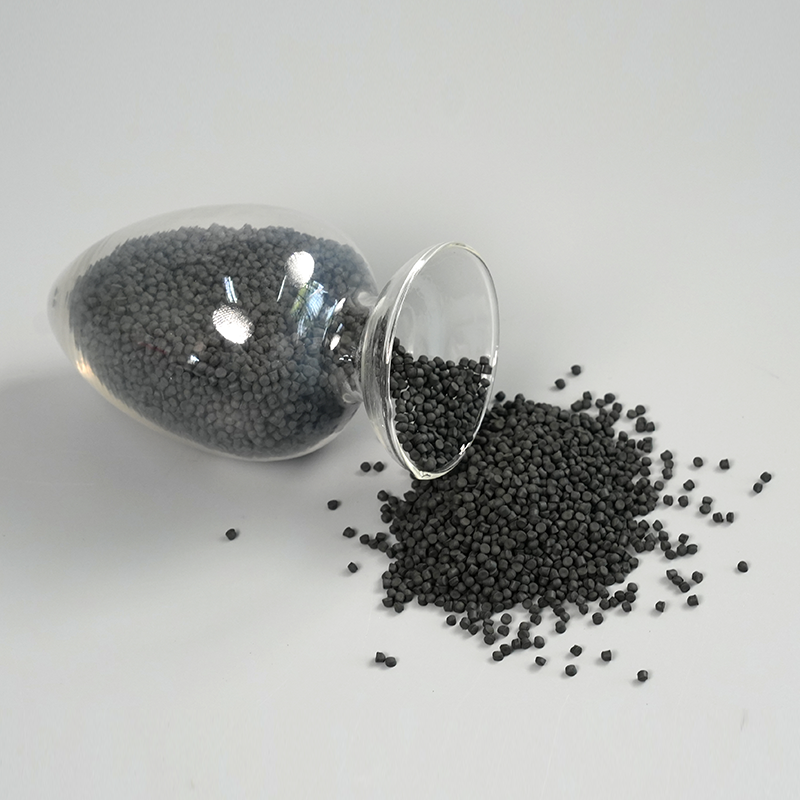
For rail transit and industrial cables, accelerator irradiation remains the most predictable option because the crosslink density is controlled electronically rather than chemically, and the finished insulation can be tested immediately after the line. We produce a dedicated 125 °C grade for this segment, and you can look at the specification for our accelerator irradiation crosslinked LSZH flame retardant insulation for rail transit below.
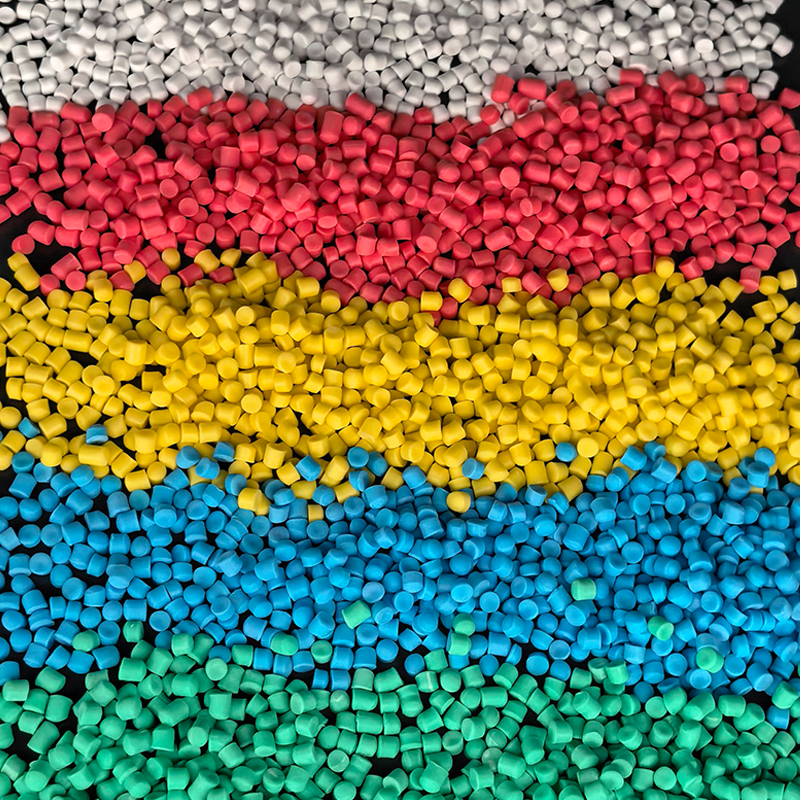 Accelerator Irradiation Cross-linked LSZH Insulation for Rail TransitA 125 °C irradiation cross-linked LSZH insulation for rail traction and signaling cables, with B1/B2 flame classification and low smoke.View Product →
Matching HFFR Compounds to the Application
Building and Construction Cables
Construction projects usually specify a B1 or B2 classification together with a 125 °C rating for wiring in risers, shafts and ceiling voids. Insulation and sheathing must work as a pair here: the insulation carries the dielectric duty while the sheath handles abrasion, moisture and the fire classification at the surface of the cable.
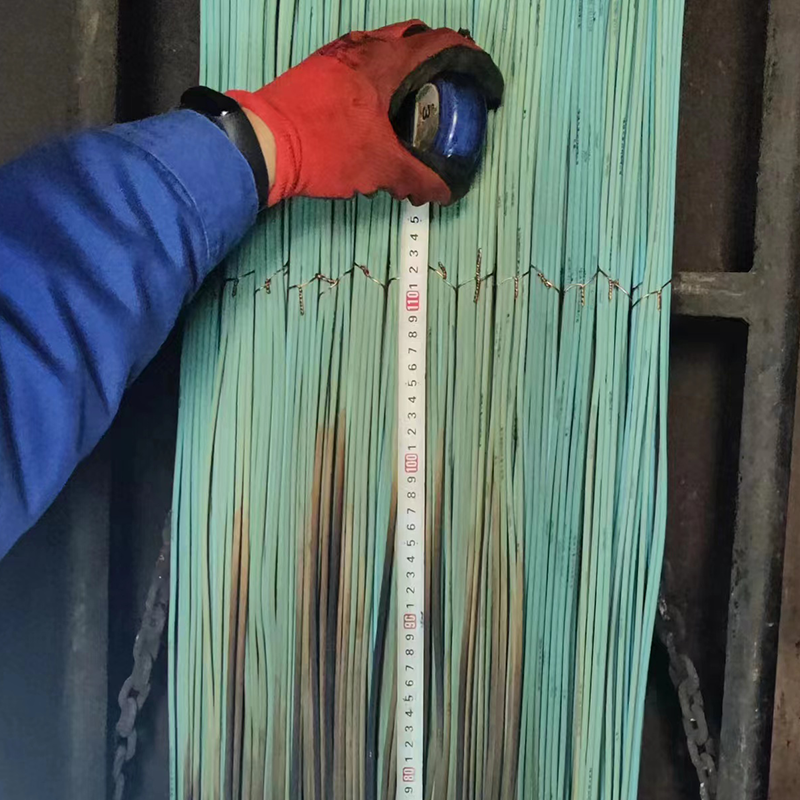 B1/B2 Low Smoke Halogen-Free Insulation for BYJ WireLow smoke halogen-free B1/B2 insulation compound for BYJ wire, suited to construction wiring needing flame retardance, low corrosiveness and no dripping.View Product →
Power Grids and Substations
Grid cables see continuous load, wide temperature swings and long service life. The priorities shift toward thermal stability and low water absorption rather than the thinnest possible smoke profile, which is why silane crosslinked and irradiation crosslinked grades dominate this segment.
Rail Transit and Rolling Stock
Rolling stock combines vibration, oil contact and strict smoke toxicity limits. Materials here must survive mechanical flexing over decades while meeting fire performance requirements, so crosslinked grades with high filler loading and good elongation retention are the usual answer.
Wind Power, Photovoltaic and Marine
These installations are exposed to ultraviolet light, salt spray and permanent mechanical movement. Flame retardant polyethylene sheathing materials developed for wind power, for example, are formulated for flexibility at low temperature and resistance to weathering rather than for the highest possible filler content.
Optical Fiber, Communication and Data Centres
Fiber optic cables bring a different problem set: tight bend radii, dense cable trays and a strong preference for materials that do not stress-crack. Sheathing and tight-buffered compounds for these cables need low shrinkage, stable attenuation behaviour and clean processing on high-speed lines.
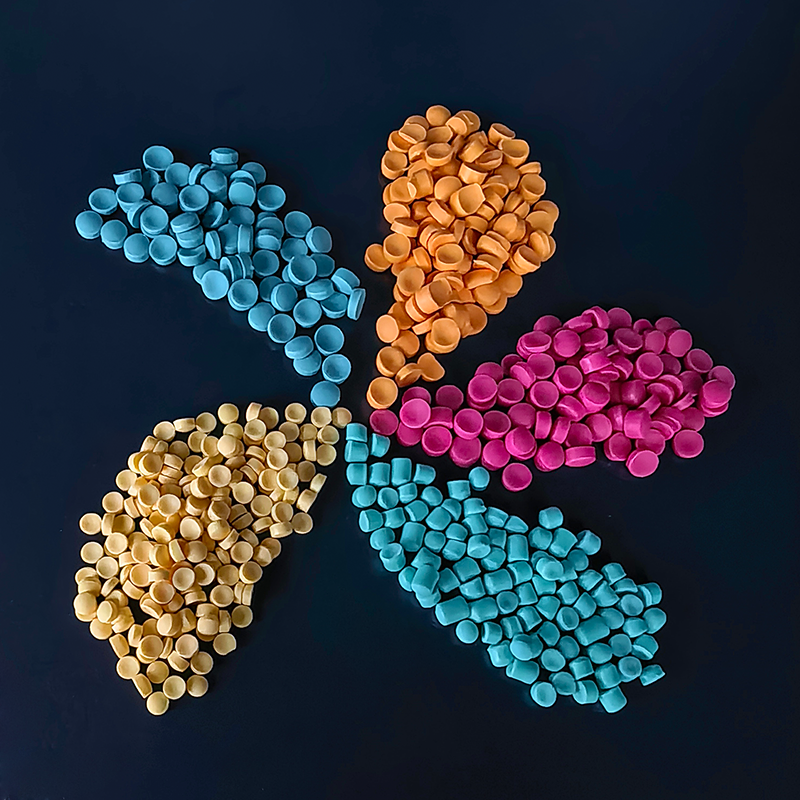 LSZH Sheathing Material for Fiber Optic Cables and Data CentersHalogen-free B1/B2 sheathing compound for communication and data center fiber cables, offering low smoke, flame retardance and smooth extrusion.View Product →
If you want to see how these grades map onto real cable designs, you can browse the applications we support.
A Practical Specification Checklist
When you sit down with a customer to select an HFFR compound, working through the same questions in the same order saves weeks of back-and-forth sampling:
- Confirm the required fire classification and the standard it is measured against — GB 31247, EN 13501-6, or a project-specific specification.
- Fix the conductor operating temperature, since this decides thermoplastic versus crosslinked.
- Define the crosslinking route available on the line, including existing irradiation, sauna or UV equipment.
- Check mechanical targets: tensile strength, elongation at break, and performance after thermal ageing.
- Review processing constraints — extruder screw design, temperature profile, line speed and die geometry.
- Confirm the sheath and insulation combination as a system, not as two independent materials.
- Agree on acceptance testing and batch traceability before the first production run, not after.
Working With a Compound Partner
Formulation is only half of the story; consistency is the other half. A cable maker running thousands of metres a day cannot afford a compound that behaves differently from one pallet to the next, which is why in-house control over raw materials, mixing and quality testing matters more than a glossy datasheet.
Our two production bases in Nantong span more than 15,000 square metres with over ten polyolefin cable compound lines, supported by a research centre of more than 3,000 square metres and a technical team of over thirty specialists. That combination lets us adjust a formulation for a specific extruder or a specific customer standard rather than asking the customer to adapt to a fixed catalogue grade. We also keep our own documentation and sustainability information open for review, because material selection is a long-term decision and the paperwork should hold up years later.
HFFR is one of those subjects that looks simple from the outside and turns out to be a series of carefully balanced compromises: filler against flexibility, flame performance against processability, cost against long-term reliability. The good news is that none of those compromises need to be a guess. Once the fire classification, the temperature rating and the crosslinking route are fixed, the rest of the specification usually falls into place.
If you are working through a cable design right now — a B1 building wire, a rail project, a fiber optic run into a data hall — send us the construction and the standard you need to meet. We will tell you honestly which grade suits it, and if a standard thermoplastic material will do the job, we will say so.