English
 Français
 Español
 русский
 عربى
Green Ohm
Green Ohm
Green Ohm
Green Ohm
Green Ohm
Green Ohm
Green Ohm
Green Ohm
Green Ohm
Content
- 1 Why Cable Producers Look for an E-Beam Alternative
- 2 Silane Crosslinking: A Proven Moisture-Cure Alternative
- 3 UV Crosslinking: Fast Curing Without High-Energy Equipment
- 4 Thermoplastic LSZH: When Crosslinking Is Not Required
- 5 E-Beam Alternatives at a Glance
- 6 How to Choose the Right E-Beam Alternative
- 7 Making the Switch Without Compromising Performance
Electron beam (e-beam) crosslinking has long been a trusted route to turning polyolefin cable compounds into tough, heat-resistant insulation and sheathing. By bombarding the material with high-energy electrons, manufacturers create a three-dimensional polymer network that improves thermal stability, mechanical strength, and chemical resistance. Yet e-beam technology is not the only path to those performance benefits, and for many cable producers it may not be the most practical one.
An "e-beam alternative" can mean several different things, depending on your production setup and the end-use environment of the cable. For manufacturers of low-smoke, halogen-free (LSZH) cables, the most relevant alternatives are silane crosslinking, UV crosslinking, and thermoplastic systems that need no crosslinking at all. Each offers a different balance of capital cost, line speed, cure mechanism, and final cable performance.
Before we compare them, it helps to understand how crosslinking works and why it matters for cable performance. That background makes the trade-offs between each alternative much easier to evaluate.
Why Cable Producers Look for an E-Beam Alternative
E-beam crosslinking is effective, but it brings a specific set of constraints. The equipment itself is expensive, requires substantial floor space, and demands strict radiation-safety management. Many cable makers do not run their own accelerators at all; instead, they extrude the cable in-house and ship reels to a third-party irradiation facility, adding lead time, freight cost, and coordination complexity.
The main reasons manufacturers evaluate an e-beam alternative include:
- High capital cost of accelerator equipment and its maintenance
- Radiation safety permits, shielding, and operator training requirements
- Outsourced irradiation logistics that slow production schedules
- Penetration limits that make e-beam less suitable for thick-wall or large-diameter cables
- Difficulty in matching e-beam supply to just-in-time production demands
When these factors become bottlenecks, silane, UV, and thermoplastic LSZH compounds offer workable paths forward.
Silane Crosslinking: A Proven Moisture-Cure Alternative
Silane crosslinking is one of the most widely adopted e-beam alternatives in the cable industry. Instead of high-energy electrons, it relies on silane groups grafted onto the polyolefin backbone. After the cable is extruded, exposure to moisture, either in hot water or in ambient humidity, triggers a hydrolysis and condensation reaction that forms crosslinks between polymer chains.
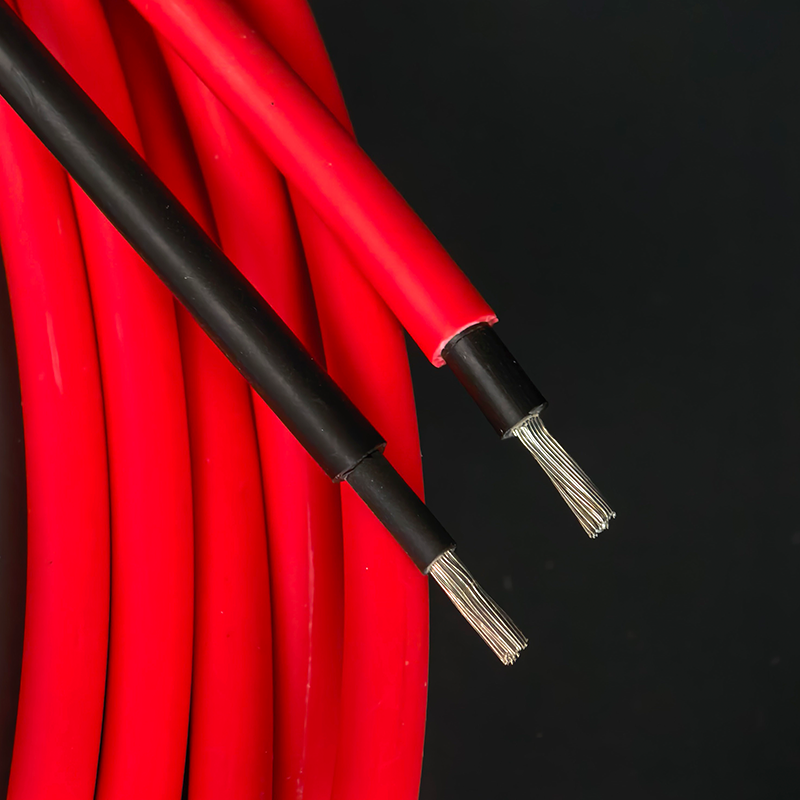
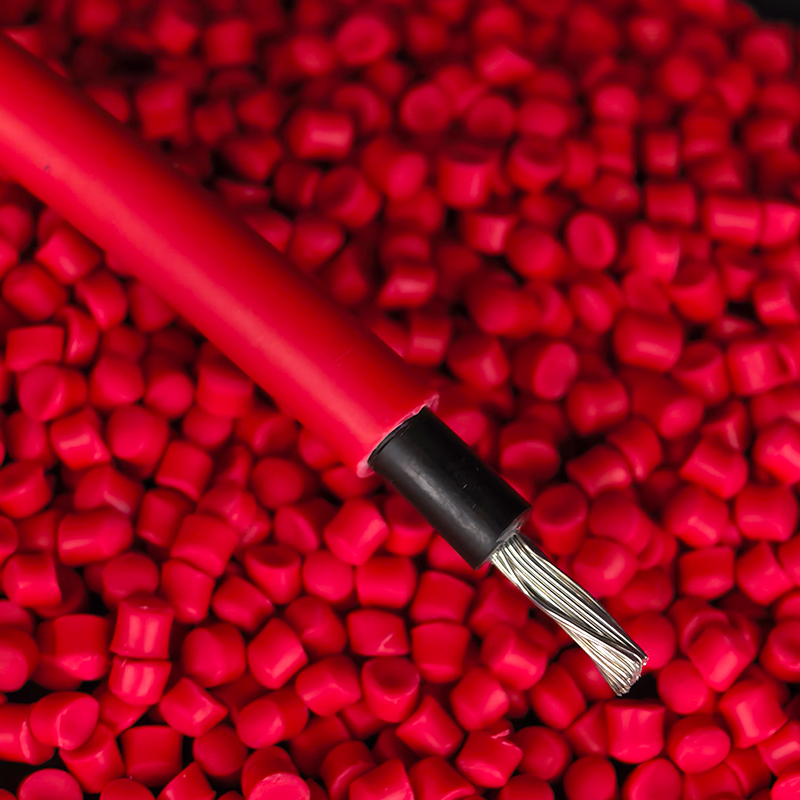 125°C Silane Cross-linked LSZH Insulation and Sheathing for Photovoltaic CablesThis silane cross-linked material cures via moisture without irradiation, simplifying production and reducing equipment cost. It offers 125°C heat resistance and UV stability, meeting TÜV, EN and UL standards for outdoor PV use.View Product →
This moisture-cure process needs no accelerator, no irradiation contract, and no special shielding. The main investment is a grafting and compounding step, which can be done with standard extrusion equipment. Cure time ranges from several hours to a few days depending on wall thickness and temperature, so silane crosslinking suits production schedules that allow inventory to cure before further processing.
For LSZH cable makers, silane-crosslinked compounds provide excellent flame retardancy, low smoke evolution, and a 125 °C rated insulation and sheathing performance that competes directly with e-beam-crosslinked products. It is a particularly attractive option for building wire, power distribution cables, and other applications where long production runs and predictable cure times are the norm.
UV Crosslinking: Fast Curing Without High-Energy Equipment
UV irradiation crosslinking is another practical alternative. In this approach, the cable compound contains a photoinitiator that reacts when the freshly extruded cable passes under a bank of UV lamps. The crosslinking reaction is triggered in seconds, which means UV crosslinking can be integrated directly into the extrusion line, with no separate irradiation step and no off-site logistics.
 UV Cross-linked LSZH Insulation for Construction Cables (Class B1/B2)This compound crosslinks in seconds under LED UV light, enabling inline extrusion and higher production efficiency. It meets GB/T 32129 and European B1/B2 fire requirements, making it ideal for building wiring.View Product →
The capital cost of UV equipment is far lower than an electron accelerator, and the energy consumption is also significantly reduced. UV crosslinking works well for thin to medium wall thicknesses where the UV light can penetrate the insulation effectively. It is a strong fit for construction wiring and building cables that require B1 or B2 fire performance in the European classification system.
In practice, a UV-crosslinked LSZH compound can match the thermal and mechanical performance of an e-beam product while giving the cable producer much more control over line speed and just-in-time production. That makes it one of the fastest-growing e-beam alternatives in the building cable segment.
Thermoplastic LSZH: When Crosslinking Is Not Required
Sometimes the most practical e-beam alternative is simply not to crosslink at all. Thermoplastic LSZH compounds deliver low smoke, halogen-free performance without a crosslinking step. They are extruded at high line speeds, require minimal process control, and can be reprocessed, which reduces waste and improves material yield.
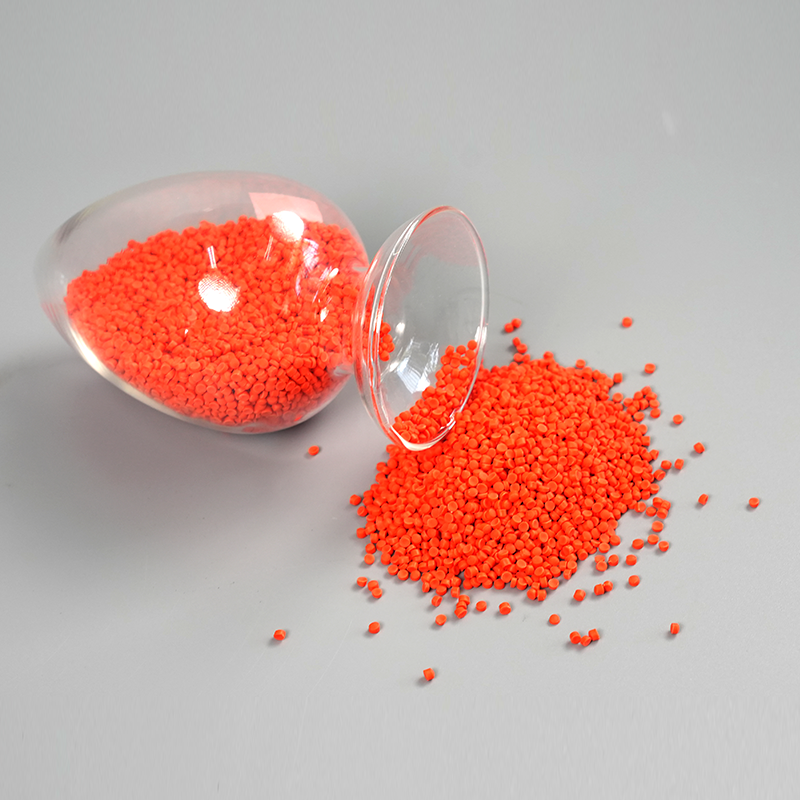 LSZH Flame Retardant Sheathing Material for Construction Cables (Class B1/B2)A thermoplastic LSZH sheathing compound that avoids crosslinking for high-speed extrusion and easy reprocessing. It delivers low smoke and halogen-free performance, complying with GB/T 32129 and EU environmental directives for building applications.View Product →
Thermoplastic systems are widely used for sheathing in construction, rail transit, and power grid cables where the insulation layer already provides the required electrical and thermal performance. They are also the preferred choice for optical fiber cables, where flexibility and easy stripping are more important than maximum service temperature.
The trade-off is that thermoplastic materials soften at elevated temperatures. If the cable design demands high-temperature resistance or resistance to environmental stress cracking under sustained load, a crosslinked product is usually the better choice. But for many standard installations, a well-formulated thermoplastic LSZH sheathing compound offers the most economical overall solution.
E-Beam Alternatives at a Glance
The table below summarizes the key differences between e-beam crosslinking and the three alternatives discussed above.
| Parameter | E-Beam | Silane | UV | Thermoplastic |
|---|---|---|---|---|
| Crosslinking trigger | High-energy electrons | Moisture | UV light | None |
| Equipment investment | High | Low | Medium | Low |
| Cure speed | Seconds | Hours to days | Seconds | Not applicable |
| Wall thickness suitability | Thin to medium | Wide range | Thin to medium | Wide range |
| Recyclability | Limited | Limited | Limited | Fully recyclable |
| Typical use | Heat-resistant insulation | Insulation and sheathing | Building wire insulation | Sheathing and optical cables |
The right choice depends on your extrusion line, the cable standard you are targeting, and the service environment the finished cable will face.
How to Choose the Right E-Beam Alternative
There is no single alternative that fits every cable plant. The decision usually comes down to four considerations:
- Production volume and line speed, since high-volume plants benefit from UV or thermoplastic systems that cure or process inline.
- Capital constraints, because silane and thermoplastic options require the lowest equipment investment.
- Cable construction, as thick-wall cables favor silane crosslinking while thin-wall building wires work well with UV.
- End-use standard and thermal rating, so check whether the cable must meet a 125 °C rating or a specific fire class such as B1 or B2.
It is always worth discussing the options with a compound supplier early in the design phase. Crosslinked and thermoplastic LSZH compounds are not interchangeable in every construction, and small formulation changes can make a large difference in processing behavior and long-term reliability. Our application specialists work with cable makers across construction, power grids, rail transit, wind power, and data center projects, and they can help you match the right compound family to your production line. See our application overview for examples of how these materials perform in real cable systems.
Making the Switch Without Compromising Performance
E-beam crosslinking remains an excellent technology for certain cable products, especially where very high thermal ratings and resistance to harsh service conditions are essential. But it is not the only way to achieve crosslinked performance, and in many cases it is not the most economical or operationally convenient route.
Silane crosslinking brings proven moisture-cure reliability at low cost, UV crosslinking delivers rapid inline curing for building cables, and thermoplastic LSZH compounds simplify processing while meeting a wide range of fire-safety requirements. By understanding the trade-offs in cure speed, penetration, equipment investment, and final performance, cable producers can select an e-beam alternative that keeps quality high and production efficient.
Whichever direction you choose, the key is to evaluate the complete system, including compound, processing equipment, cable design, and end-use standard, as a whole. With the right LSZH compound, "alternative" does not mean compromise.